




















Our Recommendations for the Best Pet Insurance Providers
- Spot Pet Insurance: Best for flexible coverage tailored to your pet’s needs
- Lemonade: Best for digital-first, fast claims via app
- Embrace : Best for vet flexibility
- Pumpkin : Best for instant-pay emergency care
- Pets Best: Best for customizable coverage
- ASPCA Pet Health Insurance: Best for comprehensive coverage from puppy to senior
- HealthyPaws: Best for unlimited lifetime payouts
- Fetch: Best for extra-comprehensive coverage
- Metlife: Best for cost-effective, customizable coverage
Key Insights
- Top providers cater to different needs
Spot offers flexible coverage options, Lemonade stands out for fast app-based claims, and PetsBest is great for those looking for customizable coverage for their pets. - Early enrollment provides the best value
Insuring pets when they’re young helps secure lower premiums and avoids pre-existing condition exclusions. - Pet insurance reimburses, not prepays
Most plans require upfront payment, with reimbursement based on deductibles, limits, and reimbursement rates. - Plan structure matters more than price
Similar premiums can hide major differences in coverage, limits, and exclusions. - Pre-existing conditions are usually excluded
Most policies don’t cover conditions diagnosed before enrollment or during waiting periods. - Insurance offers financial protection and peace of mind
Coverage helps offset rising veterinary costs and protects against unexpected emergencies.
Methodology: How We Reviewed Pet Insurance Companies
To zero in on the best pet insurance companies, the BestMoney team focused on the following categories:
Coverage terms: We considered whether each pet insurance company offers accident-only, accident-and-illness, and wellness plans. Our team also looked at deductibles, coverage limits, and reimbursement rate options as well as waiting periods. We also reviewed exclusions and coverages for commonly excluded items.
Availability: We researched each pet insurance provider’s geographical availability. Some insurers serve pet parents in every state, while others exclude coverage to those in select states or zip codes.
Costs: We compared sample rates for dogs and cats to national averages and the offerings of other competing pet insurance companies. Our team also focused on discount opportunities and overall plan value.
Claims process: We identified how easy it is to file a claim with each pet insurer. Claim filing options plus reviews from real customers helped us get a good grasp of the insurer’s typical claims process.
- Customer service: We looked at how long each pet insurance company has been in business. Plus, we reviewed its scores on reputable, third-party sites like Trustpilot and the Better Business Bureau (BBB).
Calculating Pet Insurance Costs
The sample rates in the individual insurer sections below are based on an accident-and-illness policy with a $10,000 coverage limit, a $500 deductible, and an 80% reimbursement rate unless otherwise specified.
All dog breeds are female, and all cat breeds are male. All pets live in the following cities: Albany (zip code 12242), Austin (zip code 78746), and Sacramento (zip code 95620). Prices are subject to change, and your quotes may vary.
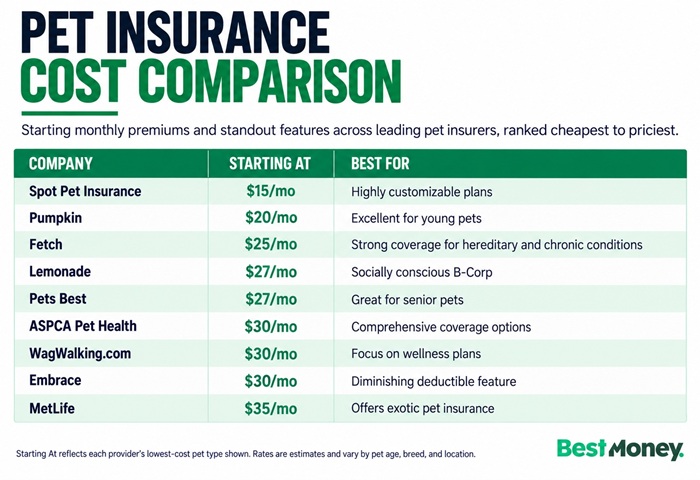
Pet Insurance Comparison Chart
The table below offers a snapshot of estimated monthly costs for different types of pets, along with the key features that make each company stand out. This will help you easily compare your options and make an informed decision.
Company | Small Dog | Large Dog | Cat | Key Features |
Spot Pet Insurance | ~$25/mo | ~$40/mo | ~$15/mo | Highly customizable plans |
Lemonade | ~$35/mo | ~$60/mo | ~$27/mo | Socially conscious B-Corp |
Pets Best | ~$40/mo | ~$65/mo | ~$27/mo | Great for senior pets |
WagWalking.com | ~$45/mo | ~$70/mo | ~$30/mo | Focus on wellness plans |
ASPCA Pet Health Insurance | ~$35/mo | ~$55/mo | ~$30/mo | Comprehensive coverage options |
MetLife | ~$45/mo | ~$65/mo | ~$35/mo | Offers exotic pet insurance |
Pumpkin | ~$35/mo | ~$55/mo | ~$20/mo | Excellent for young pets |
Embrace | ~$40/mo | ~$60/mo | ~$30/mo | Diminishing deductible feature |
Fetch | ~$40/mo | ~$65/mo | ~$25/mo | Strong coverage for hereditary and chronic conditions |
Our Top 3 Picks
Our Top 3 Picks
1. Spot Pet Insurance

Annual coverage limits: $2,500, $3,000, $4,000, $5,000, $7,000, $10,000, unlimited
Reimbursement rates: 70%, 80%, 90%
Deductibles: $100, $250, $500, $750, $1,000
Why we picked Spot as a top pet insurer: Count Spot as one of the most well-rounded pet insurers on the market. There are many reasons why Spot is ranked the best pet insurance on our list. It has affordable pricing, an industry-leading choice of seven annual coverage limits, and solid customer service scores.
In fact, Spot’s 4.7 Trustpilot score is matched only by Pumpkin and its BBB customer review score is the highest among the pet insurers we reviewed.
Customer service at a glance
Trustpilot score: 4.7
BBB rating: A- (accredited)
Common complaints? Unexpected claim denials, slow reimbursements
Common praise? Easy claim processing, compassionate customer service reps
Contact channels: Phone, email (provided to policyholders), online complaint form
Pros:
- Robust suite of customization options
- Accepts senior pets
- Offers Spot Perks, exclusive deals on pet-related purchases
Cons:
- Limited discount opportunities
- No option to pay vets directly
- 14-day accident-and-illness waiting period
2. Lemonade

Why We Like Lemonade for Pet Insurance
Lemonade stands out for its fully digital experience, fast claims processing, and affordable pricing. The company offers accident + illness coverage with flexible reimbursement and deductible options, plus preventative care add-ons. Its AI-powered claims system allows many claims to be processed quickly, which is appealing for pet parents who want a simple, tech-forward experience.
Key Features:
- Accident + illness coverage: includes injuries, illnesses, diagnostics, surgery, and medications.
- Annual coverage limits: multiple limit options available, including higher-limit tiers depending on state.
- Reimbursement options: typically 70%, 80%, or 90% of eligible costs.
- Flexible deductibles: annual deductible options to fit different budgets.
- Optional wellness add-ons: preventative care packages covering vaccines, annual exams, bloodwork, and more.
- Behavioral & physical therapy coverage: included in many standard policies.
- AI-powered claims system: many claims are processed quickly through the app.
Pros
- Fast, app-based claims processing.
- Competitive pricing for young, healthy pets.
- Includes behavioral treatment coverage in many policies.
Cons
- Not available in all states.
- May have annual coverage limits depending on plan selection.
- No coverage for pre-existing conditions.
3. Pets Best

Why We Like Pets Best for Pet Insurance
Pets Best offers highly customizable coverage with accident-only and accident + illness plans, plus optional wellness add-ons. It’s a strong choice for pet owners who want flexibility in annual limits, deductibles, and reimbursement levels — including an unlimited annual payout option. The availability of direct vet pay in many cases also helps reduce out-of-pocket burden.
Key Features:
- Multiple plan options: accident-only or accident + illness coverage.
- Annual coverage limits: $5,000, $10,000, or unlimited annual benefits (depending on plan).
- Reimbursement options: 70%, 80%, or 90% of eligible vet bills.
- Flexible deductibles: annual deductibles starting as low as $50 (varies by state).
- Optional wellness coverage: add-on plans for routine care like exams, vaccines, and dental cleanings.
- Direct vet payment available: Pets Best can often pay vets directly, minimizing upfront costs.
- Broad condition coverage: accidents, illnesses, hereditary and congenital conditions, cancer, prescriptions, diagnostics, and surgery.
Pros
- Flexible plan structures, including accident-only coverage.
- Unlimited annual payout option available.
- Optional wellness add-ons.
- Direct vet pay option in many cases.
- Short accident waiting period (often 3 days).
Cons
- Exam fees not covered on all base plans (requires higher-tier plan).
- Most plans have annual caps unless unlimited is selected.
- Claims processing times can vary.
What Is Pet Insurance?
Pet insurance is health insurance for pets. It typically covers medical care for accidents, like leg breaks, cuts, and eye pokes, and illnesses, like cancer, kennel cough, and canine influenza.
This coverage is becoming increasingly essential as veterinary service costs continue to rise—they increased by 7.9% between 2023 and 2024 . This inflation is especially noticeable in emergency care, where complex procedures like emergency surgery can run from $2,000 to over $10,000.
There are also specialized pet insurance policies or add-ons that cover preventative care, like annual checkups, vaccines, dental cleanings, and spaying or neutering procedures.
How Pet Insurance Works
Unlike traditional health insurance, pet insurance plans generally require that you pay out-of-pocket for your pet's medical care and file a claim for reimbursement. However, a few insurers, like Pets Best and Trupanion, offer a vet direct pay option.
How much you’ll ultimately get reimbursed depends largely on the following policy terms:
Coverage limits: The maximum amount the insurer covers in a given year; annual coverage limits generally range from $2,500 to unlimited.
Deductible: The amount of money you'll pay before coverage kicks in; pet insurance deductibles generally range from $0 to $2,500.
Reimbursement rate: The percentage an insurer will pay for each covered claim, once your deductible is met; reimbursement rates are generally 70%, 80%, or 90%.
To get coverage, you’ll make a monthly or annual payment, known as the policy’s premium. Higher coverage limits, higher reimbursement rates, and lower deductibles lead to higher premiums than lower coverage limits, lower reimbursement rates, and higher deductibles.
When Should You Get Pet Insurance?
When Should You Get Pet Insurance?
The best time to get pet insurance is when your pet is young and healthy. Most pet insurance providers do not cover pre-existing conditions, meaning any illness or injury diagnosed before your policy starts — or during the waiting period — will likely be excluded from coverage.
Enrolling early helps lock in lower premiums and ensures your pet is protected before costly conditions develop. Puppies and kittens are generally cheaper to insure because they’re less likely to need medical care, and there’s less chance of exclusions limiting future claims.
That said, senior pet insurance for older dogs and senior cats can still be a good idea. Many insurers accept pets well into their senior years, though premiums tend to be higher and some plans may impose coverage limits or longer waiting periods.
For older pets, accident-and-illness plans can still provide valuable financial protection against unexpected emergencies or serious diagnoses.
How to Choose the Best Pet Insurance for You
Consider the following steps to find the coverage you need at an affordable price.
- Pick a Plan Type
An accident-and-illness plan best serves most pet parents because it provides the broadest coverage, though senior dogs or cats may be priced out of some policies. - Compare Quotes
Get quotes from multiple carriers using the same coverage amount and deductible. Compare prices carefully, and don’t automatically choose the cheapest option.What Our Expert Says. - Read the Fine Print
Review the terms and conditions to ensure you’re comparing apples to apples. Pay close attention to policy exclusions, waiting periods, veterinarian restrictions, and cancellation policies. - Understand the Claims Process
Learn how to file a claim and how long reimbursement typically takes. Also check whether a vet direct pay option is available and what’s required to qualify. - Explore Customizations
If the monthly premium is over your budget, adjust factors like the deductible, reimbursement rate, or coverage limit. - Look for Discounts
Ask about multi-pet, military, spay/neuter, annual payment, and bundling discounts, and explore additional ways to lower your pet insurance costs.
Small Details Will Help Protect Your Pet
“I recommend pet owners understand different choices for percentage reimbursement, deductible levels if there are any waiting periods, and if there are any annual or per-incident maximums … Additionally, pet owners should review sample policies on the website to understand what is covered and what is excluded. Comparison tools help to highlight how provider coverage differs”
How To Compare Pet Insurance Plans
When comparing pet insurance providers, don't stop at price. Two plans with similar monthly premiums can deliver very different value depending on how coverage is structured, so work through these steps before you decide.
1. Choose a Deductible That Fits Your Budget
Decide how much you're comfortable paying out of pocket per claim. A lower deductible raises your monthly premium but reduces what you owe when you actually file a claim, so weigh the trade-off against how often you expect to use the plan.
2. Check the Reimbursement Rate
Look at what percentage of each vet bill the insurer pays after your deductible is met. Most insurers offer 70%, 80%, or 90% reimbursement, so compare this rate across providers since it directly affects your out-of-pocket costs.
3. Confirm the Annual Coverage Limit
Find out whether the plan caps how much it will pay out per year. Some plans limit payouts to $2,500–$5,000 annually, while others offer unlimited coverage, so make sure the cap fits your pet's potential needs.
4. Review What Conditions Are Covered
Ask whether the plan includes hereditary, congenital, and chronic conditions before you sign up. Skipping this step can leave you without coverage for the exact issues your pet is most likely to develop.
5. Consider Wellness Add-Ons
Decide if you want optional coverage for routine care like vaccines, dental cleanings, and annual exams. These add-ons cost extra but can offset predictable, recurring expenses.
6. Ask About Direct Vet Pay
Check whether the insurer can pay your veterinarian directly instead of reimbursing you afterward. This reduces the upfront expense you'd otherwise have to cover at the time of treatment.
Working through these six steps side by side helps ensure you choose a plan that aligns with both your budget and your pet's long-term health needs.
Tools to Compare Pet Insurance Policies
“As you look over these plans, please be sure to focus on coverage limits and exclusions. Also, pay attention to when policies actually begin and will pay out benefits. This can help you avoid unwanted financial surprises and make the most informed decision for your furry friend.”
What Does Pet Insurance Cover?
Pet insurance covers some of your pet's medical bills, but the type of health care expenses your policy will pay for depends on your plan type.
Accident-Only Plans
These plans cover treatment for injuries incurred as a result of an accident, including, but not limited to:
Broken bones
Lacerations
Poisoning
Swallowed objects
Burns
Accident-and-Illness Plans
These plans cover treatments for accidental injuries and medical illnesses, including, but not limited to:
Cancer
Allergies
Diabetes
Arthritis
Parvovirus
Wellness Plans
Typically sold as an add-on, pet wellness plans help cover routine and preventive care such as:
Annual exams
Vaccinations
Dental cleanings
Spaying/neutering procedures
Medications for flea and tick or heartworm prevention
Pet insurance that covers dental care is usually offered through wellness plan add-ons, though coverage is often limited to cleanings and preventive care rather than advanced dental procedures.
What Doesn't Pet Insurance Cover?
Almost all pet insurance plans exclude certain types of care. While exclusions vary, they often include:
Pregnancy or breeding-related expenses
Cosmetic procedures
Care related to owner negligence
Genetic testing
Most policies also include waiting periods. Accident waiting periods typically range from one to 14 days, while illness waiting periods are usually 14 to 30 days. Some conditions, such as hip dysplasia, may have longer waiting periods.
Pet owners often search for pet insurance for pre-existing conditions, but it’s important to understand that most pet insurance plans do not cover pre-existing conditions. In general, pet insurance that covers pre-existing conditions is extremely limited, and what pet insurance covers pre-existing conditions depends on whether a condition is considered curable, temporary, or permanently excluded by the insurer.
Learn more about what pet insurance does and doesn’t cover.
How Much Does Pet Insurance Cost?
The average monthly cost for an accident and illness policy is $59.73. Cat insurance costs typically range between $29.46 and $56.60 per month, while dog insurance averages between $50.28 and $102.26 per month.
Cheap pet insurance plans do exist, but the most affordable pet insurance options often come with higher deductibles, lower reimbursement rates, or coverage limits that reduce payouts for expensive treatments.
How Are Pet Insurance Costs Determined?
The cost of pet insurance varies by the terms of your policy, but it’s also affected by your pet’s age, type, breed, location, gender, and other personal information.
For instance, young pets are typically cheaper to insure as they're less prone to illness. Conversely, pets in areas with a high living cost are generally more expensive to insure as local vet bills are pricier.
Beyond that, some breeds are more prone to congenital or hereditary diseases than others or are known to engage in riskier behaviors that lead to injuries. These breeds typically cost more to insure.
What to Avoid in a Pet Insurance Plan
Not all pet insurance policies offer the same level of protection, and certain plan features can significantly limit your coverage when you need it most.
Common pitfalls to watch for include:
No coverage for hereditary or breed-specific conditions
High deductibles paired with low annual limits
Exclusions for chronic or long-term conditions
Vague definitions of pre-existing conditions
No direct vet payment options
Lengthy or condition-specific waiting periods
Understanding these limitations upfront can help you avoid unpleasant surprises later.
Bottom Line: Is Pet Insurance Worth It?
Pet insurance can provide valuable financial protection and peace of mind, especially as veterinary care becomes more advanced — and more expensive. Emergency surgeries, specialty treatments, and chronic illness management can easily cost thousands of dollars.
This financial security translates directly into better care: a 2024 study showed that insured dogs visit the veterinarian 4.2 times per year on average, compared to just 2.4 times for uninsured dogs and are 51% more likely to receive surgical treatment when needed.
While insurance isn’t the right fit for every pet owner, it often proves worthwhile for pets with higher health risks, breeds prone to illness, or households that want protection from unpredictable vet bills. Comparing policies carefully and choosing coverage that fits your budget is key to making pet insurance work in your favor.
Learn more about how to determine if pet insurance is worth it.
FAQ about Pet Insurance
What Is the Best Travel Insurance for Pets?
Spot Pet Insurance offers the best travel coverage for pets. It lets you visit any licensed vet in the U.S. or abroad, provides up to 90% reimbursement, and includes 24/7 telehealth support for emergencies while traveling. Generally, the best travel insurance for pets includes emergency medical coverage while traveling.
Which Pet Insurance Is Most Worth It?
Spot Pet Insurance is the most worth it overall, compared to other pet insurers. It combines flexible plans, comprehensive coverage, and fast claims, while Embrace and Pets Best also offer strong value depending on your pet’s age and needs.
Is Pet Insurance Expensive?
We've found that pet parents typically pay around $60 per month or $720 per year for a pet insurance policy, but the exact cost varies depending on factors such as pet type, age, location, and more. For instance, cats generally cost less to insure than dogs, and breeds prone to illness, like French bulldogs, are more expensive than less risky breeds, like mixes.
You can often find a policy in your budget by selecting a higher deductible or reimbursement rate, although this requires you to pay more out of pocket for care.
How Do Pet Insurance Companies Know About Pre-existing Conditions?
Pet insurers generally ask for at least one year's worth of veterinary records when you apply for a policy or file your first claim. Some insurers require a medical exam within 30 days or so of buying a plan. During this exam or records review, the insurer will identify pre-existing conditions.
Is Pet Insurance Tax-Deductible?
Typically, pet insurance is not tax-deductible, though there are exceptions for service animals.
Does Pet Insurance Cover Only Cats and Dogs?
Some carriers also cover amphibians, reptiles, birds, small mammals, and horses, though these coverages are less common. ASPCA Pet Health, for instance, offers horse insurance, while Nationwide will insure exotic pets
What Is the Best Dog Insurance?
We've found that Lemonade, Pets Best, Figo, and CarePlus by Chewy offer particularly competitive rates for dog insurance. However, the best insurance for your dog may vary by pet type, location, and other personal information. It's helpful to compare pet insurance quotes from multiple top insurers to find the best policy for your canine.
At What Age Should You Get Your Dog or Cat Pet Insurance?
Pets can benefit from insurance at any age. Kittens and puppies may need accident coverage, while older pets may need illness coverage. Wellness care add-ons benefit pets of all ages. Getting pet insurance as soon as possible is often worthwhile as younger cats or dogs are cheaper to insure (given they're less likely to develop an illness), and there's less time for a pre-existing condition to develop.