- Home/
- Mortgage Loans/
- 12M Loans Qualify for a Mortgage Assumption: Here’s How to Inherit a 3% Rate
12M Loans Qualify for a Mortgage Assumption: Here’s How to Inherit a 3% Rate
June 2, 2026
June 2, 2026
About 1 in 4 mortgage loans —about 12 million—can be transferred to a new buyer. These are called assumable loans, and they let buyers take over a seller’s existing mortgage, including ultra-low interest rates of 3% or less.
That's a big deal today, since current rates are close to 6%. As a result, more buyers are looking at assumable loans as a way to lock in those lower, pre-2022 rates.
Even a 1% difference in interest rates can add $150 or more to a monthly mortgage payment and cost tens of thousands of dollars in interest over the life of the loan.
But is it as straightforward as it sounds? Here's what both buyers and sellers need to know about how mortgage assumptions work, who qualifies, and when it's worth pursuing.
A mortgage assumption is when a homebuyer takes over a seller’s mortgage, including their interest rate, repayment terms, and remaining balance. The seller is generally released from any further liability for the loan after closing.
For buyers, this can mean significantly lower monthly payments and interest savings compared to taking out a new mortgage loan at today’s rates.
Generally, FHA, VA, and USDA loans are assumable, so if you have one, it’s likely that a buyer can assume the loan. VA loans can be assumed by either VA or non-military buyers.
Conventional loans aren’t assumable. If you sell a home with a conventional loan, you typically need to pay off the loan in full.
Pro tip: If you assume an FHA loan with a mortgage insurance premium (MIP), you’ll carry that MIP for the life of the loan. This may diminish some of the advantages of the lower interest rate.
Check your loan agreement or closing disclosure (under the “Additional Information About This Loan” page; see below) to know if you have an assumable loan.
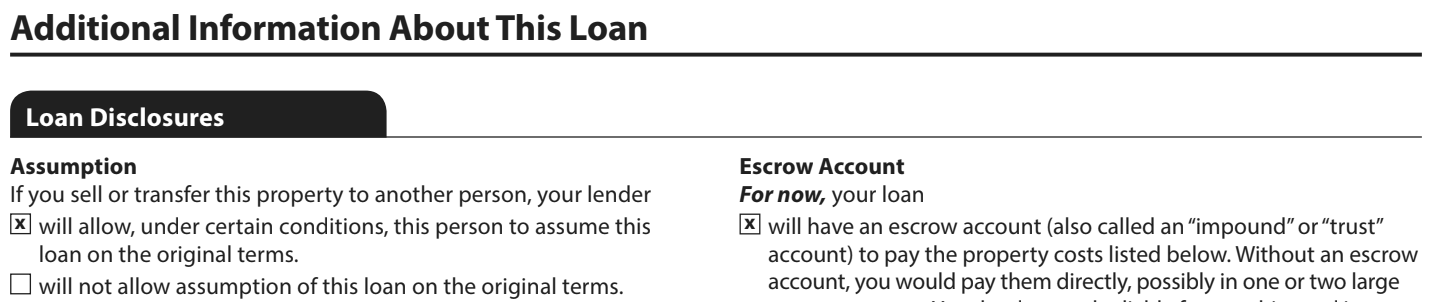
If you don’t have your loan documents, call your servicer. Take the opportunity to learn more about their mortgage assumption process and typical timelines.
Assuming a mortgage is similar to a regular mortgage transaction, with a few extra steps:
"It's just like applying for a loan. They have to fill out a loan application, have their credit run and do everything else," explains Neil Brooks, real estate agent and NewDay USA spokesperson. "If that all checks out, then the loan servicer will send a release of liability and an establishment of eligibility [for VA loans] to the seller," adds Brooks.
Pro tip: If you're a seller having your loan assumed, ask your loan servicer in writing for a release of liability. Make sure you receive written confirmation that you're no longer responsible for the mortgage, otherwise you may remain liable if the buyer defaults.
Keep in mind this process can take 45 to 90 days or more, since servicers handle everything manually and aren't set up like loan originators.
Loan servicers charge buyers an additional fee for mortgage assumptions. Expect standard closing costs plus an assumption fee—capped at $1,800 for FHA loans and $300 for VA loans. The USDA has no set cap, but lenders typically charge at least $300.
A benefit of assuming a USDA loan is that you avoid the 1% upfront guarantee fee, since the seller already paid it when they took out the loan.
Funding the equity gap can be a challenge, but many buyers find ways to meet it. For example, one Reddit user recently assumed a VA loan at 2.25%. The loan balance was $295,000, and the home’s purchase price was $725,000, leaving $430,000 for them to put down. They paid $300,000 in cash to cover part of the equity gap, then used an adjustable-rate home equity loan for the rest.
While not everyone has a positive mortgage assumption experience, many who have had a successful sale don’t have regrets. One seller on Reddit says, “It worked for both of us. He paid close to asking, took over a solar loan, and paid the difference in cash. He kept a 2.25% rate for another 25 years.”
To start, sellers must have an assumable mortgage (FHA, VA, or USDA loan) for a buyer to take over the loan. Borrower mortgage assumption requirements are also similar to those for a new mortgage application.
However, if a buyer needs secondary financing to cover the equity gap, “that adds a whole other layer of complication to this equation,” says Brooks. “And then if they have that loan, do they still qualify for [the assumable] loan? What does it do to their DTI [debt-to-income] ratio…Does it knock them out?”
Many buyers run the numbers with a lender before committing to the assumption route to better ensure they’ll qualify for both loans and that the blended rate is better than current market options.
If you’re a buyer wondering how to come up with the difference between the home’s purchase price and the mortgage balance, consider one or a combination of these financial strategies below:
For a full picture of your options, talk to your mortgage lender or loan officer. You can also get free or low-cost advice from a HUD-approved housing counselor. Other professionals who can help include financial advisors, CPAs, and real estate agents experienced with loan assumptions.
Assumable loans are a real alternative, but the process is lengthy and complex, requiring commitment from both the buyer and the seller. Here are five key considerations for both sides.
Buyers must cover the gap between the loan balance and the sale price. For older homes, gaps can be hundreds of thousands of dollars due to appreciation and mortgage payments. This often requires significant cash or extra financing, causing many deals to fall apart.
Deals involving mortgage assumptions can fall apart after months, leaving listings stale and often forcing major price cuts, says Brooks.
Brooks adds that, at least for VA loans, the assumption benefit rarely attracts more buyers or higher prices. Many of the offers that do come in are from investors who make offers below the asking price.
Mitch Coluzzi, co-founder of SoldFast and a licensed real estate broker, says assuming federal loans can be a “black box.” His team worked with sellers who had both an assumed and a secondary USDA loan that they originated on the same property.
After selling in 2025, the sellers paid what the USDA payoff requested, but months later faced a surprise $12,000 subsidy-recapture charge from the assumed loan because the USDA didn’t include it in the payoff.
Coluzzi's team chased the USDA for months, routed from one representative to another without resolution. As of this writing, it’s still unclear if the lien on the assumed 1988 mortgage was ever released in county records. The property title may still be clouded, despite the USDA system showing both loans as paid.
Buying or selling a home with an assumable mortgage can take 90 days or more from when the offer is accepted. Buyers and sellers may not want to wait that long.
Any eligible borrower can assume a VA loan, but if a civilian assumes it, the seller’s entitlement stays tied to the loan until payoff. Your entitlement could be permanently reduced if the buyer defaults.
Assumable mortgages can be a smart move if you’re not in a rush to buy or sell. Buyers who can cover the equity gap with cash or secondary financing, and who end up with a lower overall interest rate than current market rates, may benefit most.
For sellers, it may be worth having your loan assumed if your rate is below 4% or if you have a qualified buyer in mind, such as a friend or family member. That way, you don’t have to list the home, and the home doesn’t appear to linger on the market if the financing doesn’t work out.
It’s ideal for sellers who have a VA loan, and the buyer is another veteran. This lets you reuse your entitlement on a new home and avoids your entitlement potentially being permanently reduced if the buyer defaults on the loan.
The mortgage assumption path isn’t for everyone. If you need to buy or sell quickly, a traditional sale is faster. Both buyers and sellers should weigh the risks, since deals may fall through after months or leave lingering liabilities.
Buyers should reconsider whether covering the equity gap would stretch their finances too thin, whether their blended rate is close to market rates, or whether they plan to move soon.
Sellers with a large gap between their remaining loan balance and the home’s value may find that their pool of buyers is too limited to make a mortgage assumption an attractive benefit. If you’re a seller with a VA loan, you may also want to avoid tying up or risking your entitlement with a non-military buyer.
Finding assumable loans isn’t always easy. Many MLSs don’t include a field for it, and agents may not know enough about assumable loans to ask sellers if they have one. Some paid platforms have recently come on the scene to make searching easier, offering databases or assistance with the process for a fee.
If you prefer to avoid fees, partner with an agent familiar with assumable loans, check home search websites for assumable listings, or review county records to identify mortgage types. Homes sold between 2017 and 2021 often offer lower rates and may have a smaller equity gap than homes purchased earlier.
Can you take over someone else’s loan? Yes, you really can. Assuming a mortgage can be a smart way to secure a low interest rate on your mortgage and make monthly payments more affordable. However it comes with important considerations for both buyers and sellers.
Brooks strongly urges working with a real estate attorney to review the loan terms, understand potential liabilities, and ensure key safeguards aren’t overlooked before committing.
Lorraine Roberte is a trusted debt and mortgage expert for Besmoney.com. As the CEO and Founder of Crafty Writing, she specializes in personal finance and insurance content. She has written for leading publications like AAA, GoodRx, Investopedia, PNC Bank, CNN Underscored, Bankrate, and many more. She does the hard work of breaking down complex financial topics like loans, mortgages, debt, and insurance coverage to help readers make confident decisions.