2,562 Reviews
Unlock Personal Loans Review
July 26, 2026
•
6 min
July 26, 2026
•
6 min
Lender type: Consumer finance company
Loan types: Home equity agreement
Loan amounts: $15,000 to $500,000
Loan terms: Up to 10 years
Best for: Homeowners with substantial equity who need cash but may not qualify for traditional financing due to low credit scores
Unlock is known for its customer support, given its strong third-party review scores and response times. It scored lower in costs and flexibility because, while its HEA lets you skip monthly payments and interest, it also carries comparatively high upfront costs and requires you to share home equity, which imposes several restrictions.
Let’s dive deeper into category performance in our full Unlock home equity review.
Unlock is a consumer finance company that provides home equity agreements (HEAs) to homeowners who prefer to avoid or can’t qualify for traditional home equity financing or personal loans. It’s headquartered in Tempe, Arizona, and operates a branch office in Troy, Michigan. The company currently serves homeowners in more than 25 states and has funded over 20,000 home equity agreements since launching in 2020.
While a new market entrant relative to traditional lenders, Unlock also tends to outperform these providers on third-party review platforms. It has a Trustpilot score of 4.8 out of 5 with almost 2,000 reviews, well above our computed debt consolidation loan industry average of 3.5.
The company also holds an accredited A+ rating from the Better Business Bureau (BBB) and a 3.81 customer review score. That review score is significantly higher than the industry average of 2.19, though it’s based on a relatively small sample size of 64 reviews.
One of Unlock’s biggest selling points is its lower minimum credit score requirement (500 or higher) compared to traditional lenders. Many banks, credit unions, and even online lenders require at least good credit (a score of 670 or higher) to qualify for a debt consolidation or home equity loan.
Having said that, you’ll need to meet the following criteria to receive a HEA offer from Unlock:
Property value: $175,000 to $3,000,000
Home equity: 30% or higher
Credit score: 500 or higher
Debt-to-income ratio: 45%
Mortgage payments: No more than one 90-day late payment in the past 2 years
Bankruptcies: No bankruptcies or foreclosures in the past 5 years
You’ll also need to live in one of the 25 states that Unlock services.
Unlock’s home equity agreement (HEA) offers homeowners a lump-sum cash payment based on their home’s future value. It works like this:
Unlock determines your starting home value, typically based on a third-party appraisal.
If your equity is 30% or higher, it calculates the amount it can offer as a HEA.
The offer is based on an investment percentage of the home’s value, ranging from 5% to 24.95%, with amounts from $15,000 to $500,000.
One key benefit of an HEA is that, because it’s not a traditional loan, there are no monthly payments or traditional interest. This flexibility benefits people with variable or fixed incomes and can offer peace of mind about short-term expenses.
Long-term, prospective borrowers should account for certain limitations and trade-offs. For starters, you must take out at least $15,000. That’s relatively standard for home equity loans or home equity lines of credit (HELOCs), but it's higher than for debt consolidation loans, which have minimums of $1,000 to $5,000.
Plus, you have 10 years to repay Unlock’s HEA by selling the home, refinancing, or paying it back directly. Traditional home equity loans and HELOCs offer longer or more flexible repayment terms, typically 10 to 30 years.
It’s also worth noting that HEAs involve an active lien on your home, along with other fine print. For instance, homeowners may face limits on refinancing, additional borrowing, property transfers, or major home renovations without Unlock’s approval. Ultimately, whether Unlock is right for you comes down to how comfortable you are with these trade-offs.
Expert take: “Homeowners who plan to move within the next 5 to 10 years might benefit from such an agreement … Otherwise, they may find it difficult to pay the lien to Unlock without selling their home and finding themselves in a precarious housing situation.” — Todd R. Christensen, HUD-certified housing counselor and Accredited Financial Counselor (AFC)
APR Range: N/A
Origination fees: 4.9% on the lump sum you receive as an investment payment
Prepayment penalty: Technically, no. Homeowners can buy out Unlock’s share and regain full ownership of their home during the HEA term through a full or partial buyout. The payoff amount is based on the home’s appraised value and the agreement’s appreciation-sharing formula.
Other notable charges: Fees for real estate transactions, including appraisal, inspection, title, escrow, and more. Maintenance fees apply if your home's value drops significantly due to neglect.
On paper, Unlock’s offer of “no monthly payments” or “interest” may be enticing, but it’s important to remember that HEAs aren’t free. For starters, Unlock charges an upfront origination fee of 4.9% of the lump sum. So, say you take out $200,000; you’ll owe Unlock $9,800 and receive $190,200.
That’s high for a home equity financing product; traditional home equity loans and HELOCs typically charge origination fees of 0% to 5%. Plus, unlike traditional debt consolidation loans — where origination fees are comparable or higher, unless you have excellent credit — you’ll have to pay “closing costs,” including home appraisal, title search, escrow, and recording fees.
Finally, it’s important to understand how Unlock’s home equity share works. While Unlock initially invests 5% to 24.95% in your home, your required payout is likely to be closer to double that. That's because Unlock typically uses a 2.0 Exchange Rate (or multiplier) to determine the percentage of your home's future value.
While this structure can be confusing, ultimately, it means the company’s final share of your property’s value can become much larger over time. This chart also illustrates how taking more from Unlock upfront can require you to pay more later.
Home Value | Investment Payment | Ending Home Value* | Homeowner’s Share | Unlock’s Share | |
Loan A | $200,000 | $15,000 | $243,799 | $210,886 | $32,913 |
Loan B | $200,000 | $20,000 | $243,799 | $199,915 | $43,884 |
Loan C | $200,000 | $30,000 | $243,799 | $177,973 | $65,826 |
* Based on 2% annual home value appreciation over 10 years; estimates only. Your costs may vary.
As a potential customer, we found Unlock easy to use. The website is intuitive and transparent, clearly stating the requirements for homeowners pursuing an HEA.
The online pre-qualification application has three simple steps. First, Unlock asked us to enter our address to assess the potential value of our home. Once entered, it showed us the estimate.
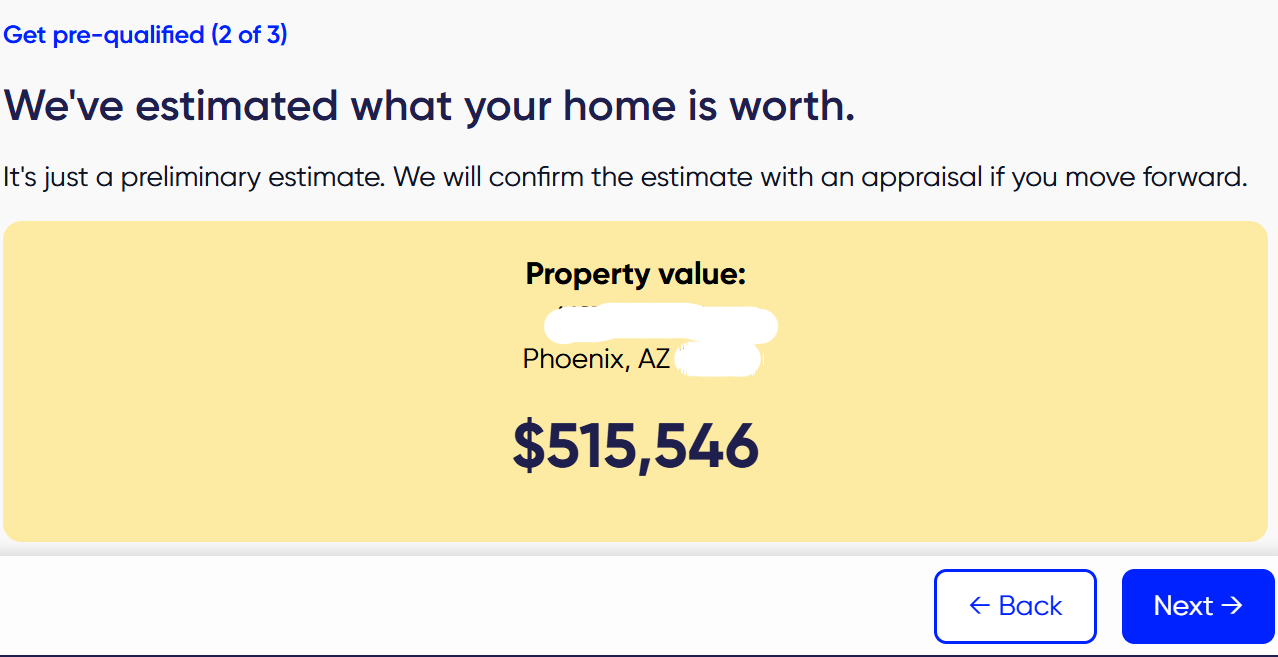
Next, Unlock asked us to provide our name, email, and phone number for further correspondence.
Per Unlock, the full underwriting and funding process for qualified applicants typically takes 30 to 60 days. Unlike many top lenders, it does not offer a mobile app, and the website is only accessible via a mobile browser.
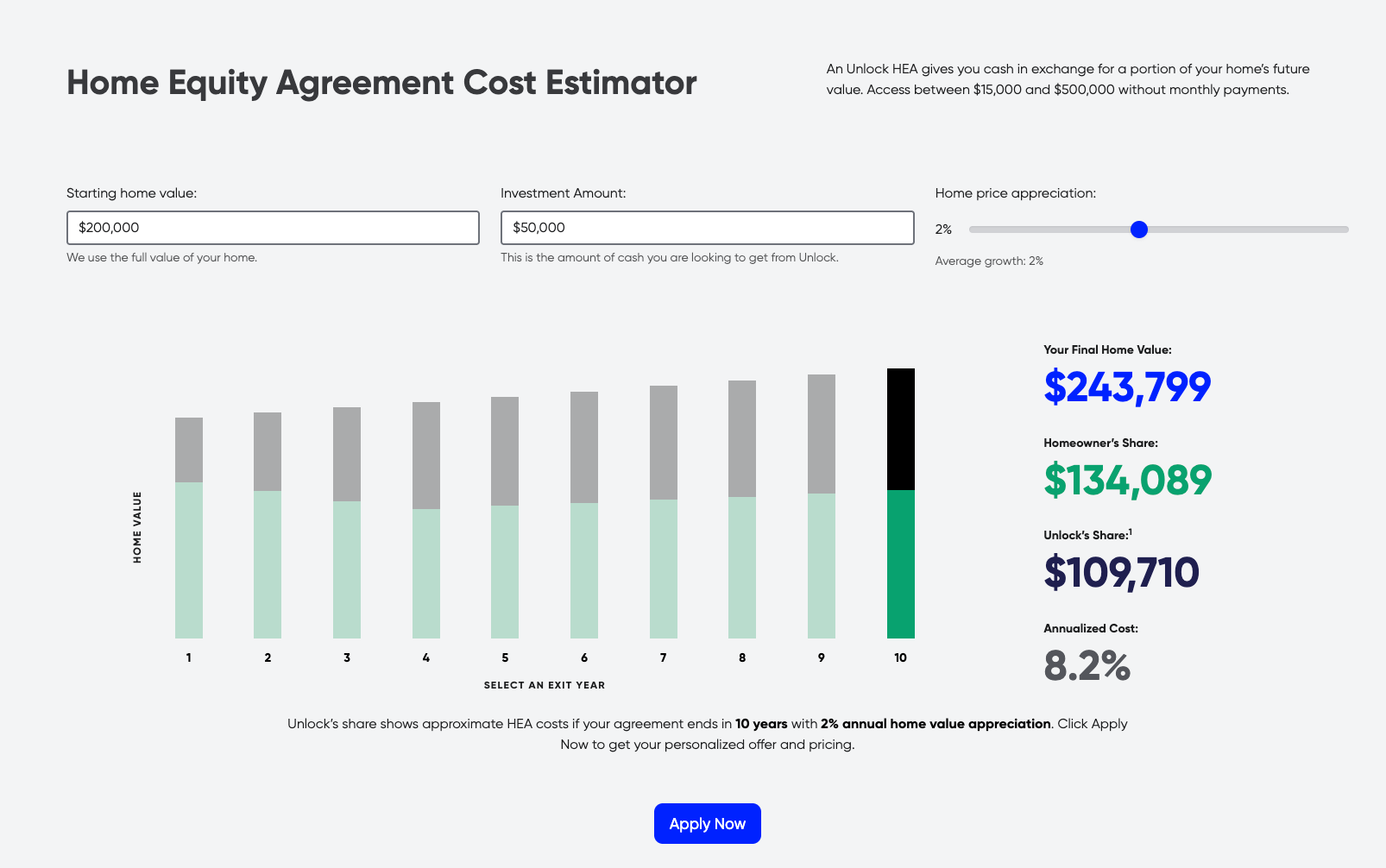
One thing we appreciated, especially given Unlock’s untraditional financing and pricing structure: Its website includes an in-depth FAQ section, along with a product guide, to walk you through the HEA process, explain key terms and formulas, and more. You can also use its online cost estimator to get an idea of what your HEA might cost in the short- and long-term.
Unlock offers three ways to reach its customer service department: Agents are available over the phone Monday through Friday from 9 a.m. to 8 p.m. ET at 1-800-560-3450. Our wait time was seven minutes after connecting to the correct extension.
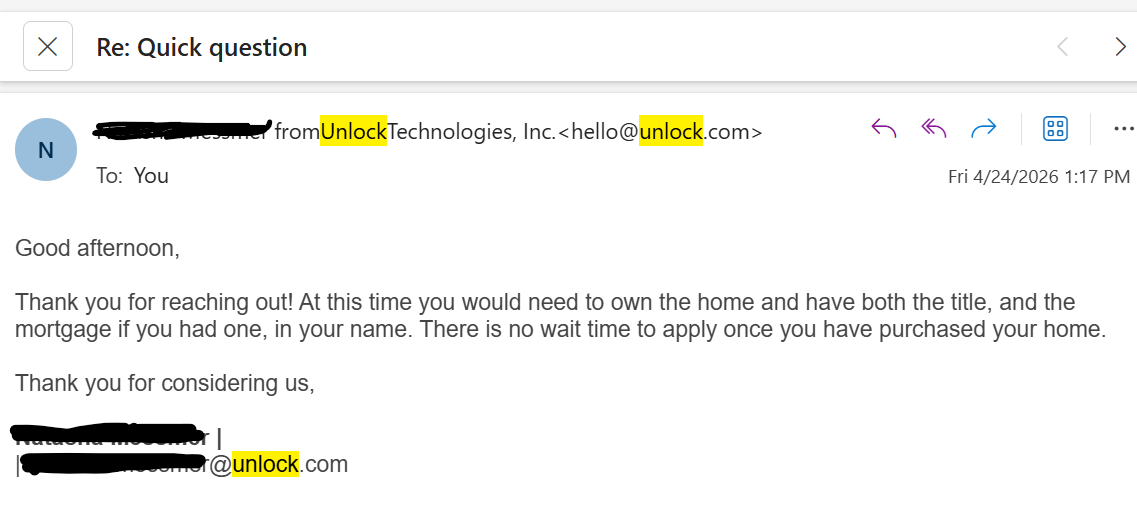
You can also email hello@unlock.com. During testing, we received a response within an hour of sending our initial email. We were also given a name with a direct email address for further questions.
Finally, Unlock receives direct mail at 1230 W. Washington Street, Suite 310, Tempe, Arizona, 85288.
These channels and response times are relatively standard for online fintech companies, though some provide 24/7 customer support and real-time chat.
Customer reviews of Unlock are generally positive regarding the application experience, customer service, and accessibility to borrowers who may not qualify for traditional financing. Many reviews praise Unlock representatives for clear communication throughout underwriting and closing.
Per one satisfied customer on Trustpilot: “They were great in explaining each step and communicating what was required from the underwriter. I never felt like I was wasting my time with unnecessary documents.”
Still, many online commenters, particularly on Reddit, expressed skepticism about the long-term cost of sharing home appreciation — a drawback echoed by some dissatisfied borrowers.
As a one-star reviewer on Trustpilot wrote: “My experience with Unlock has been disappointing. While they present their program as a way to access your home’s value, the structure ends up costing you a large portion of your equity when it’s time to settle or buy out. The numbers didn’t add up in my case, and I felt the outcome was unfair.”
At Best Money, we reviewed and compared 34 lenders based on 35 criteria across 5 categories, including:
Reputation: Years in business, accreditations, and other scores
Accessibility: Availability in state, loan types, and other eligibility criteria
Cost: APRs, fees, charges, and discounts
User Experience: Prequalifications, funding speed, and digital functionality
Customer Service and Support: First-hand experience, customer service channels and availability, client and expert testimonials
We assessed how well Unlock performed in each category relative to its competitors.
Expert take: “The Unlock model makes sense in a narrow set of situations: a homeowner who cannot qualify for a HELOC because of credit issues or irregular income, who needs cash now, and who is willing to give up future appreciation in exchange for no monthly payment obligation. For someone with a 700+ credit score, steady income, and the ability to make monthly payments, a HELOC from any competitive lender is going to cost less over time.” — Brennan Kolar, senior financial analyst
Unlock is best for homeowners with substantial equity (30%+) who need cash but don’t want or can’t take out a personal loan or HELOC with monthly payments. Still, it’s important to understand how HEAs work and whether you’re OK with their trade-offs, including sharing future home appreciation, paying upfront fees, placing a lien on the property, and potentially limiting refinancing or borrowing flexibility during the agreement.
We suggest thoroughly reading the fine print and asking questions about Unlock’s HEA before signing. It’s also a good idea to compare its offer to traditional debt consolidation or home equity loans to ensure Unlock is the best fit for you.
Unlock may require you to pay off certain debt or property liens when your HEA is originated, but the remaining funds are unrestricted.
Unlock imposes no income requirements to qualify for its HEA. However, you need a minimum credit score of 500, sufficient home equity, and no recent bankruptcies, foreclosures, short sales, or deeds in lieu within the past five years.
The cost of your HEA depends on your home’s future value at the end of the 10-year term. Unlock offers a Cost Estimator tool to help forecast an offer.
1230 W. Washington Street, Suite 310, Tempe, AZ 85288
Unlock Disclamer
Terms and Conditions Apply
Athena Valentine Lent writes about loans and personal finance for BestMoney. Her personal finance writing has appeared in Buzzfeed, The College Investor, GOBankingRates, U.S. World News, Achieve Loans, Prudential, and more. She is the author of Budgeting for Dummies (Wiley, 2023) and Personal Finance for Teens For Dummies (Wiley, 2025).