- Home/
- Online Banking/
- 72% of Gen Z Prefer Online Banks: Our Survey Reveals
72% of Gen Z Prefer Online Banks: Our Survey Reveals
September 10, 2026
September 10, 2026
To uncover the trends shaping the future of Gen Z banking, we examined recent data studies on the subject and surveyed consumers across the country to gain additional insights.
Recent data shows that 72% of Gen Z banking customers now opt for online banks to handle their financial activities.
This shift may reflect a growing trend where convenience, mobile access, and seamless digital experiences are no longer just perks — they are increasingly important for this on-the-go generation.
Let’s delve deeper into recent data about the Gen Z banking landscape, exploring their preferences and expectations. We’ll also provide some easy-to-follow tips for finding the right bank for your financial needs.
Additional Key Takeaways:
Gen Z expects a quality customer experience in their digital banking, with 73% indicating that it heavily influences their choice of financial institution. (Oliver Wyman Forum, 2023)
Data security is a top priority for Gen Z, with 80% trusting their main financial provider. (MX Technologies, 2023)
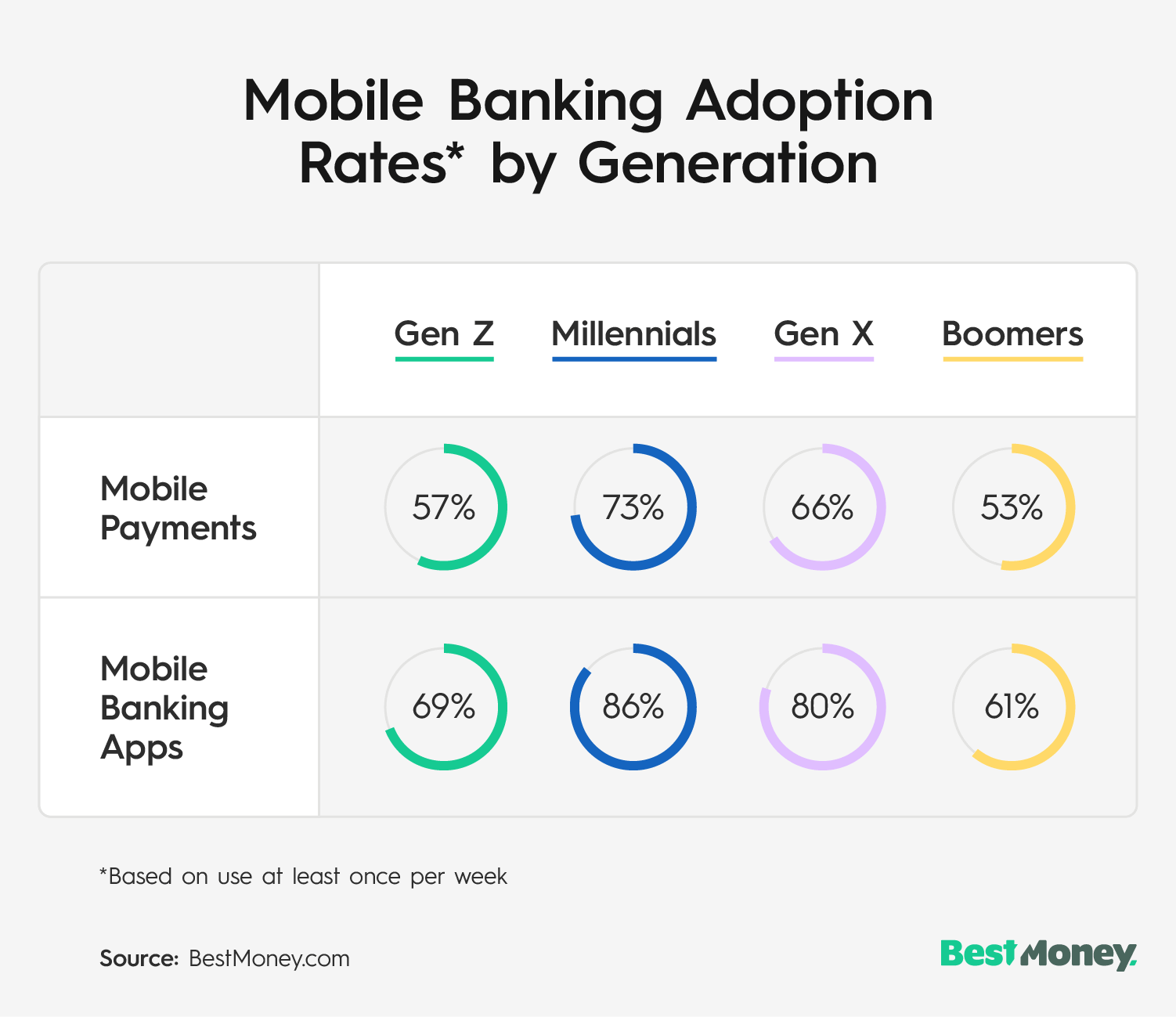
57% of Gen Z use mobile payments at least once a week, while 69% use their bank's mobile app at least once a week. (BestMoney.com, 2024)
42% of Gen Zers switched their primary bank in the last year due to dissatisfaction with mobile banking options. (PYMNTS, 2024)
A 2023 study by the Oliver Wyman Forum found that a staggering 72% of Gen Zers use a neobank — a direct, online-only bank — as their primary budgeting tool. This preference for digital-only financial institutions highlights a significant shift in how younger generations manage their money.
Unlike previous generations, which are more likely to use traditional banks with physical branches, Gen Z gravitates toward platforms that prioritize convenience and flexibility. This digital-first approach aligns perfectly with the fact that 75% of Gen Z feel comfortable making payments through digital tech companies.
As digital natives, Gen Z has grown up with smartphones, high-speed internet, and apps that offer instant access to nearly everything. It's no surprise, then, that they expect the same speed and efficiency in their financial services. Neobanks and fintech platforms often meet these expectations with mobile-first solutions.
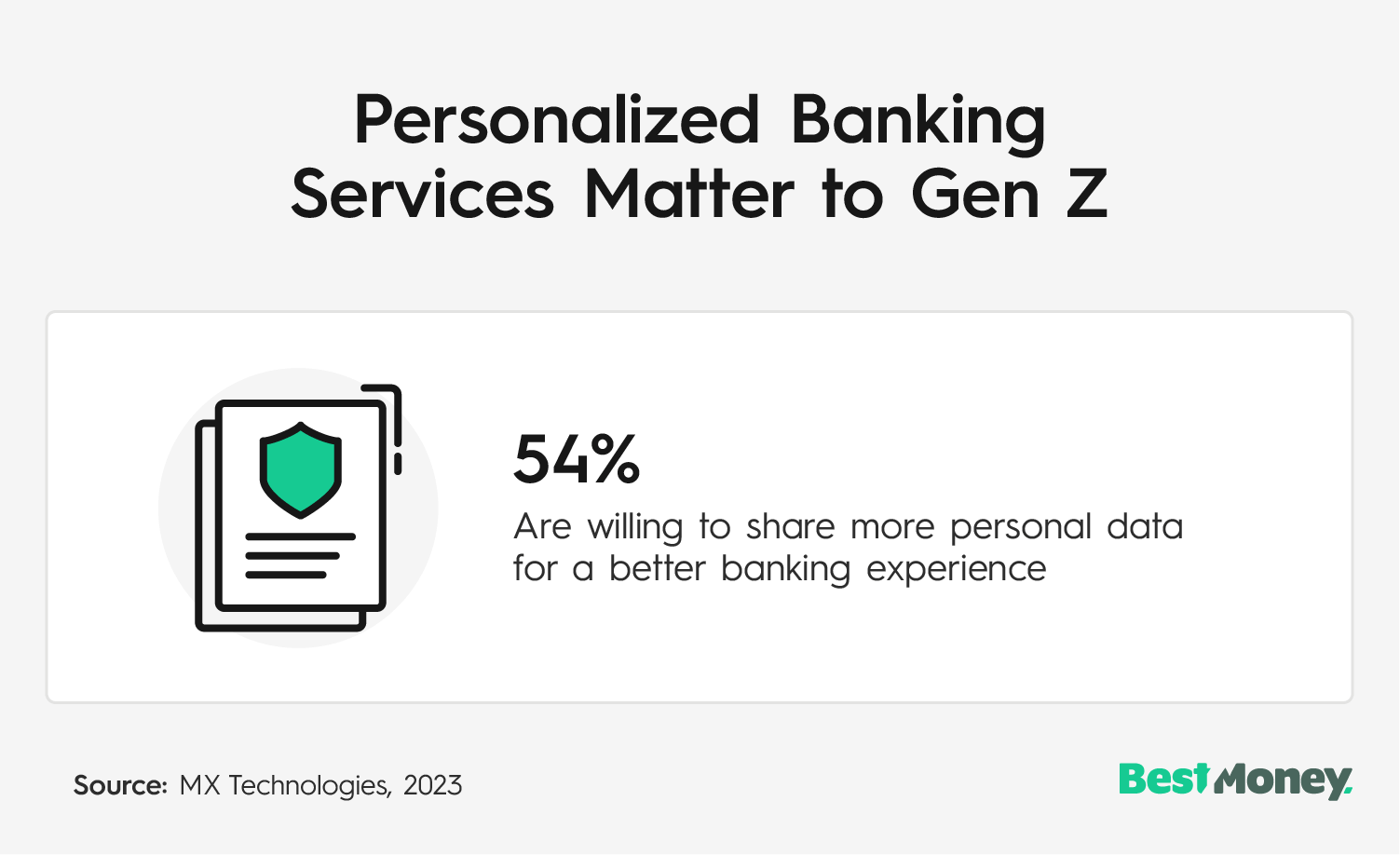
Personalization also plays a key role in Gen Z’s embrace of digital banking. According to MX research, 54% of Gen Z consumers would willingly share more personal data with their financial provider if it meant a better banking experience. This willingness to exchange data for personalization underscores the generation's desire for a tailored, predictive, and highly interactive banking experience.
For Gen Z, the decision to bank digitally is as much about lifestyle as it is about practicality. Online banking provides the flexibility to manage finances from anywhere, anytime, without the limitations of traditional brick-and-mortar banking hours.
While most financial institutions now offer online services, data from Oliver Wyman Forum reveals that 73% of Gen Zers feel that the customer experience they experience online is a critical factor in deciding which brand to trust. Raised on smartphones, this generation values both digitization and an exceptional user experience that integrates convenience and personalization.
This high expectation for digital service quality has made Gen Z extremely mobile-focused. In fact, 42% of Gen Zers switched their primary banking relationships in the last year, largely driven by dissatisfaction with mobile banking options, according to a recent study by PYMNTS.
“The demand for accessibility is so strong that Gen Z is 2.5 times more likely to leave their financial institution if mobile services aren’t up to par. For these customers, the ability to manage their finances from anywhere, at any time, is essential.
Despite embracing this digital technology, Gen Z remains highly concerned about privacy and data security. A report from MX Technologies reveals that, when selecting a financial provider, roughly 50% of Gen Zers ranked trust and security among their top priorities. This focus on security highlights that, while Gen Z values convenience, they won’t compromise on safety when it comes to their financial information.
The same survey also revealed that 80% of Gen Zers trust their primary financial service provider to protect their personal data, reflecting a strong sense of confidence in the institutions they choose to bank with.
For online-only banks and fintech companies, delivering a secure experience is crucial to gaining and retaining Gen Z’s loyalty. Offering and clearly communicating robust security features may be key to maintaining trust with this security-conscious generation.
As we highlighted earlier, 72% of Gen Zers rely on a neobank app as their primary budgeting tool, underscoring their strong preference for mobile-first solutions. This dedication to their mobile devices extends to how frequently they manage their finances, with 52.5% of Gen Zers checking their accounts at least once per day.
Mobile banking has become a critical tool for this generation.
Our BestMoney survey findings complement this data story. We discovered that 57% of Gen Zers use mobile payment services at least once a week, and 69% regularly access their bank's mobile app. Access to mobile banking is central to their financial habits, from routine payments to more complex tasks like saving, investing, and managing credit.
An academic study published in the Applied Human Factors and Ergonomics journal found that Gen Z primarily uses on-the-go banking for money transfers and payments, underscoring their need for fast, accessible financial solutions that fit their mobile-first habits.
As financial institutions look to appeal to this generation, focusing on a seamless, accessible, and highly responsive mobile experience will be key to earning and maintaining Gen Z’s loyalty.
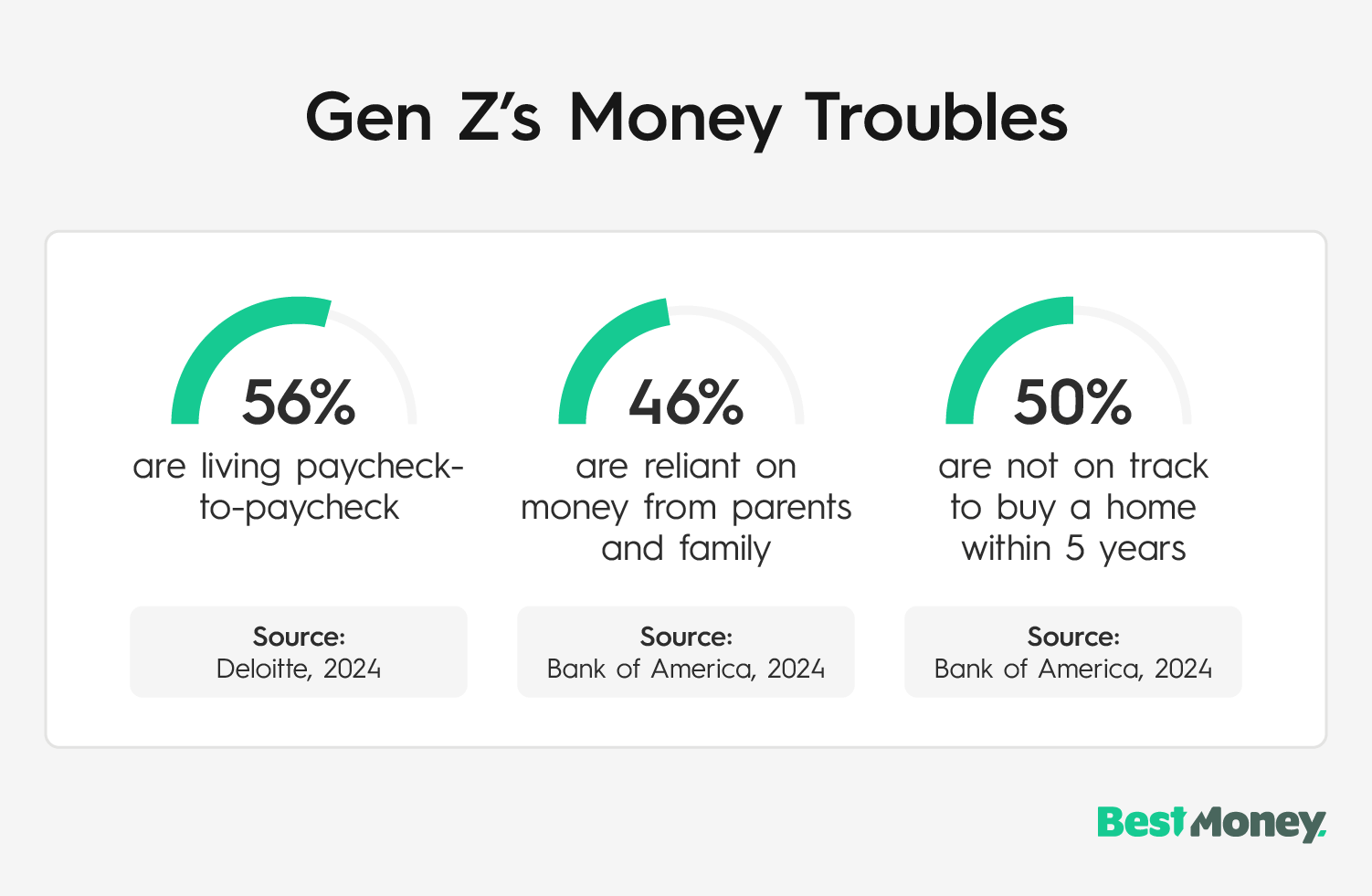
While Gen Z embraces online banking, their financial situation can be precarious. A recent Deloitte Global survey revealed that over half (56%) of Gen Zers are living paycheck-to-paycheck, highlighting a precarious financial situation for this generation. This makes features like easy accessibility and real-time account management through online platforms even more crucial.
With many Gen Zers strapped for cash, managing finances becomes a balancing act. Online banking allows them to check their balance almost instantly, transfer funds quickly, and avoid unnecessary fees associated with traditional banking activities, like missed check payments or ATM withdrawals outside their network.
Gen Z's financial struggles are further highlighted by their reliance on family assistance. According to a Bank of America survey, 46% of Gen Zers (ages 18-27) still rely on financial support from parents and family. That means fewer Gen Zers are taking advantage of the financial tools available through their banks, such as loans and investment strategies.
The financial challenges faced by Gen Z are hindering their ability to achieve key financial milestones. Over half of the Gen Zers surveyed by Bank of America stated that they are not on track to buy a home (50%), save for retirement (46%), or start investing (40%) within the next five years.
Despite their financial challenges, Gen Z remains optimistic about their future financial prospects. Nearly half (48%) of Gen Zers expect their personal financial situations to improve over the next year, according to Deloitte. To navigate this journey, they seem to be actively seeking financial guidance and support.
Gen Z is leveraging their social media to seek financial advice. More than a third of both Gen Zers and Millennials trust financial advice from social platforms. This is especially true for Gen Z, with 44% relying on platforms like TikTok and Instagram for financial insights.
While social media platforms provide easily accessible — although not always reliable — financial content, Gen Z understands the potential limitations of this advice. This is evident from the 93% who are comfortable discussing their finances with friends. One-third (33%) claim they do it all the time or frequently.
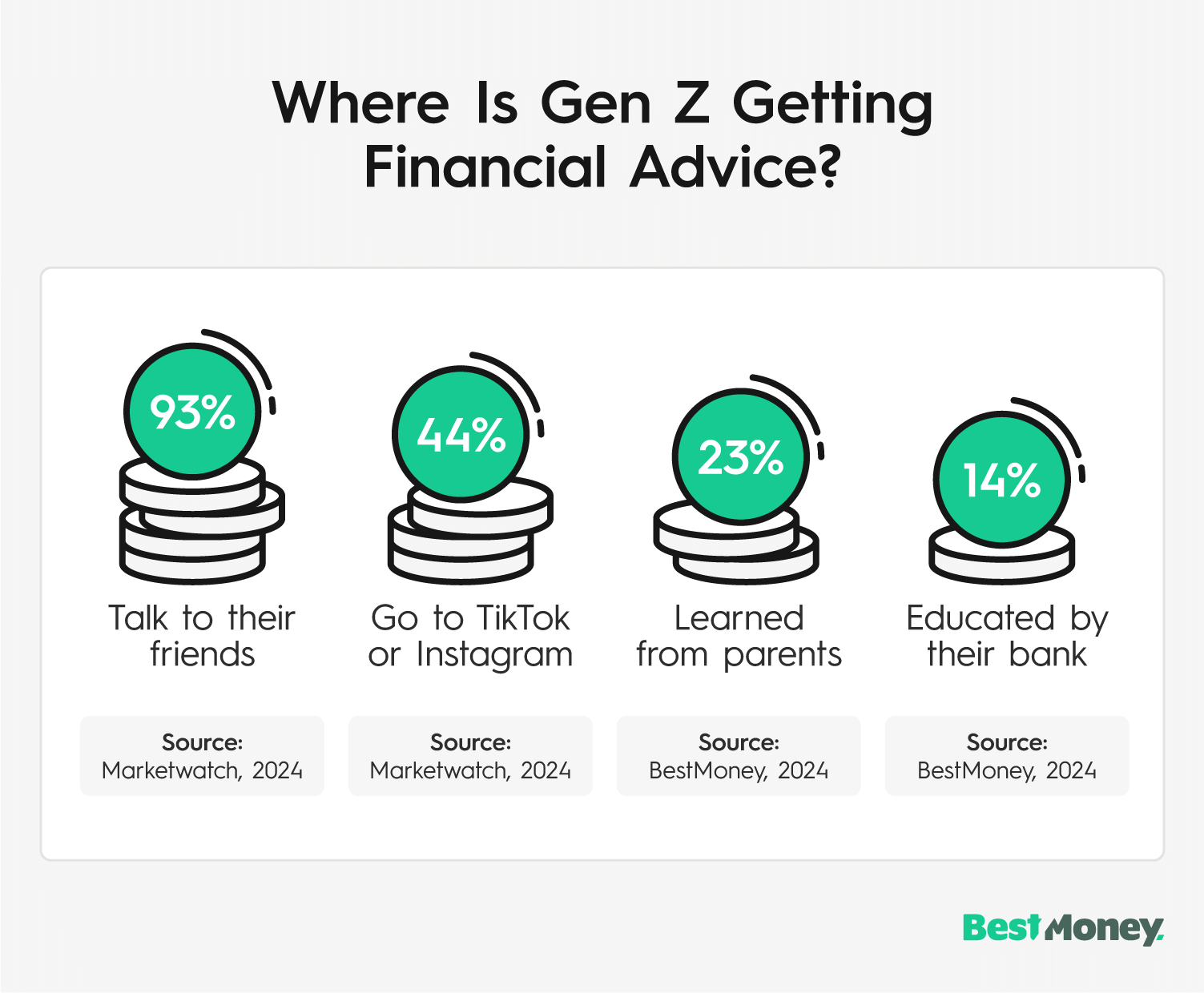
We found that Gen Z is also more likely than other generations to rely on their bank for financial guidance. When asked about their primary source of financial knowledge, Gen Z ranked their bank (14%) second only to parents (23%).
These statistics highlight Gen Z's desire for a multi-faceted approach to financial education, combining the immediacy of social media with the credibility of established institutions and trusted people. This reflects Gen Z's overall preference for a blended approach to online banking that combines the convenience of digital platforms with the reliability of traditional sources.
With so many banking options available, finding the right fit for your needs and preferences can be overwhelming. Consider the following factors when selecting a bank.
1Financial Goals:
2Banking Habits:
3Fees and Charges:
4Customer Service:
Choosing the right bank may impact your financial well-being. To find the bank that best suits your needs, consider the following tips.
1 Research and Compare
2 Read Fine Print
3 Consider Your Future Needs
4 Don't Be Afraid to Switch
While Gen Zers favor online banking for its convenience, they also value security and trust. This generation expects robust privacy protections, influencing their adoption of mobile payments and apps. Although they are more inclined to embrace digital solutions, a significant emphasis on safety shapes their financial decisions.
A survey of over 400 adults aged 18+ was conducted via SurveyMonkey Audience for BestMoney on September 11, 2024. Data is unweighted and the margin of error is approximately +/-3% for the overall sample with a 95% confidence level.
The BestMoney editorial team is composed of writers and experts covering a full range of financial services. Our mission is to simplify the process of selecting the right provider for every need, leveraging our extensive industry knowledge to deliver clear, reliable advice.