- Home/
- Car Insurance /
- New York State Has the Most Expensive Work Commute in the US
New York State Has the Most Expensive Work Commute in the US
December 11, 2024
December 11, 2024
With the national average commute time sitting at approximately 26.8 minutes and gas prices and insurance costs fluctuating across states, some commuters face significantly higher financial burdens than others.
Our team analyzed the data to rank the states based on the costs of the average work commutes. New York took the top spot as the most expensive state for commuters, while North Dakota ranked as the least expensive.
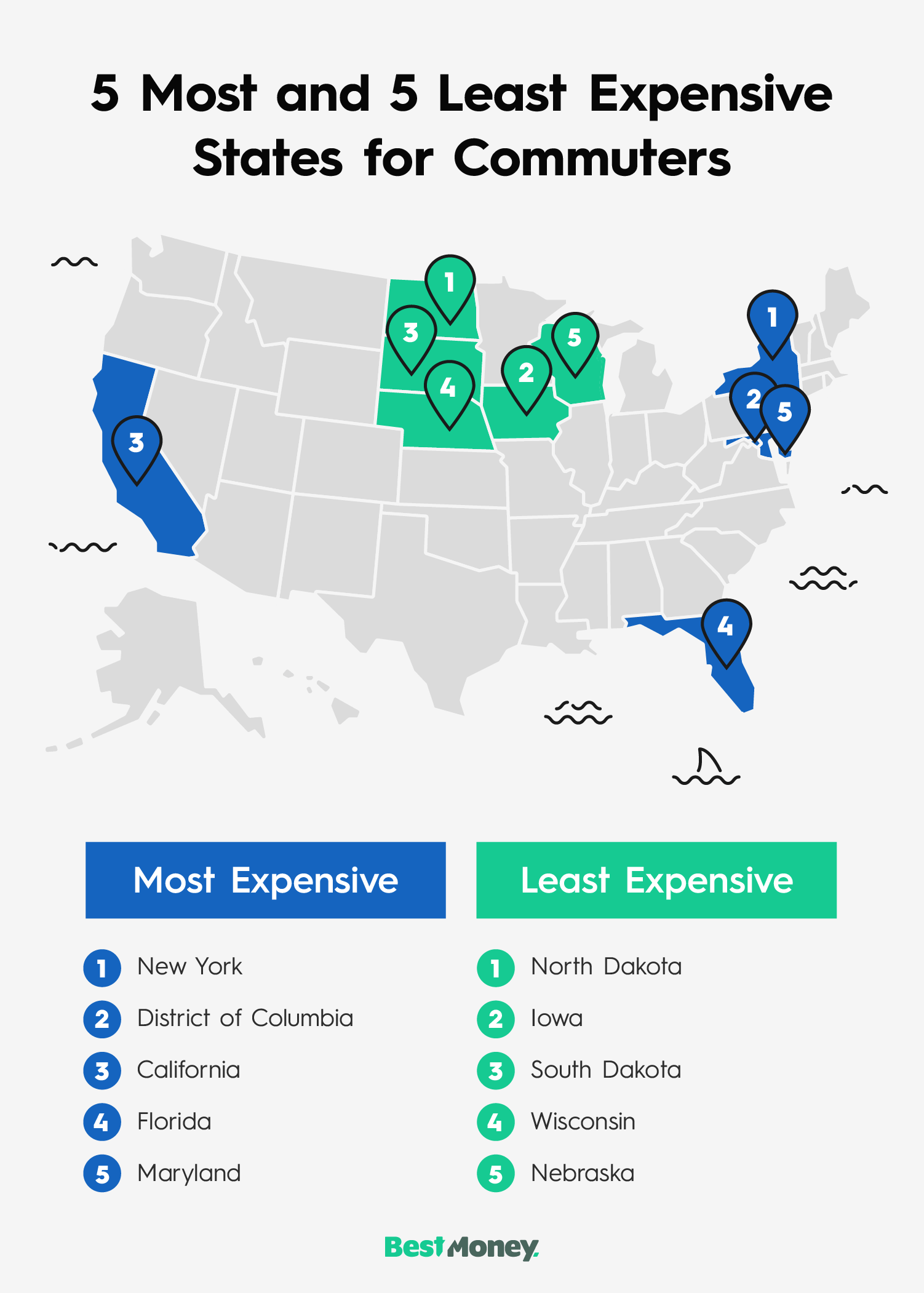
In this post, we’ll examine these rankings, showcasing how much state-level factors can impact the different costs of commuting by car to work.
We’ll also identify additional benefits for your health and the environment and share practical tips to lower your commuting expenses, such as finding ways to save on car insurance by reducing your mileage through a shorter commute.
| State | Average Commute Time (minutes) | Average Gas Price | Average Car Insurance Premium |
|---|---|---|---|
| 1. New York | 33.2 | $3.151 | $1,634.94 |
| 2. District of Columbia | 30.5 | $3.176 | $1,559.42 |
| 3. California | 29.2 | $4.485 | $1,212.81 |
| 4. Florida | 27.9 | $3.127 | $1,517.66 |
| 5. Maryland | 32 | $3.053 | $1,303.66 |
For residents of the five states where commuting costs the most, the related daily expenses can strain monthly budgets, impacting everything from disposable income to savings goals. They also often spend more time in traffic, increasing stress and reducing time for other priorities.
Over time, even small differences in commuting costs can add up, making location a crucial factor for affordability.
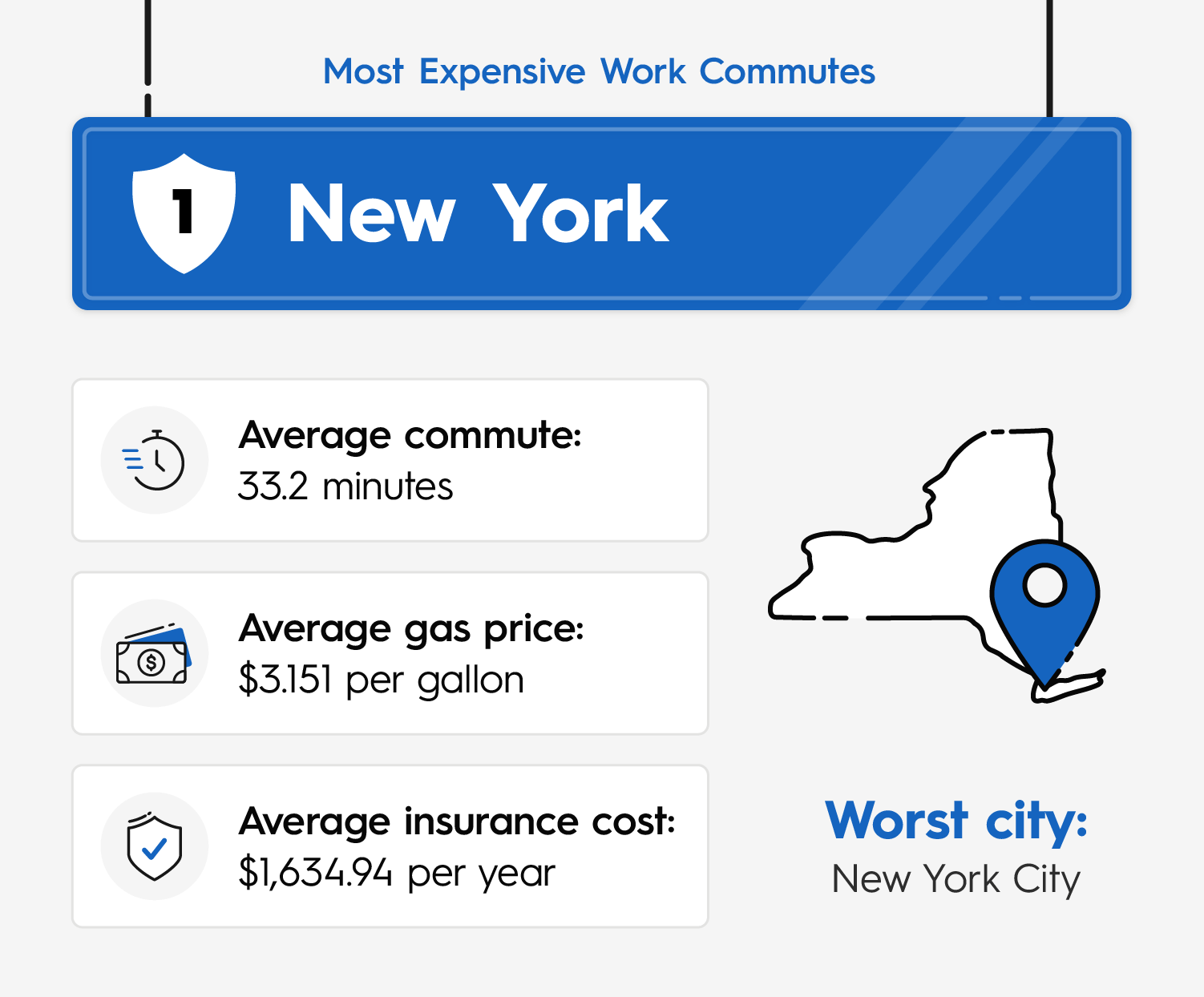
New York tops the list of most expensive states for commuting, and it’s no surprise given the combination of factors driving up costs.
Traffic congestion and an average last-mile speed of just 11 mph make driving in the city inefficient. These factors, combined with steep parking costs and high toll fees, make NYC’s commutes particularly grueling.
The city's extensive subway and bus network couples with its pedestrian-friendly design to offer viable alternatives to driving. Given the high costs associated with driving in NYC, a shorter commute could be achieved by opting for more walkable neighborhoods or relying on public transportation.
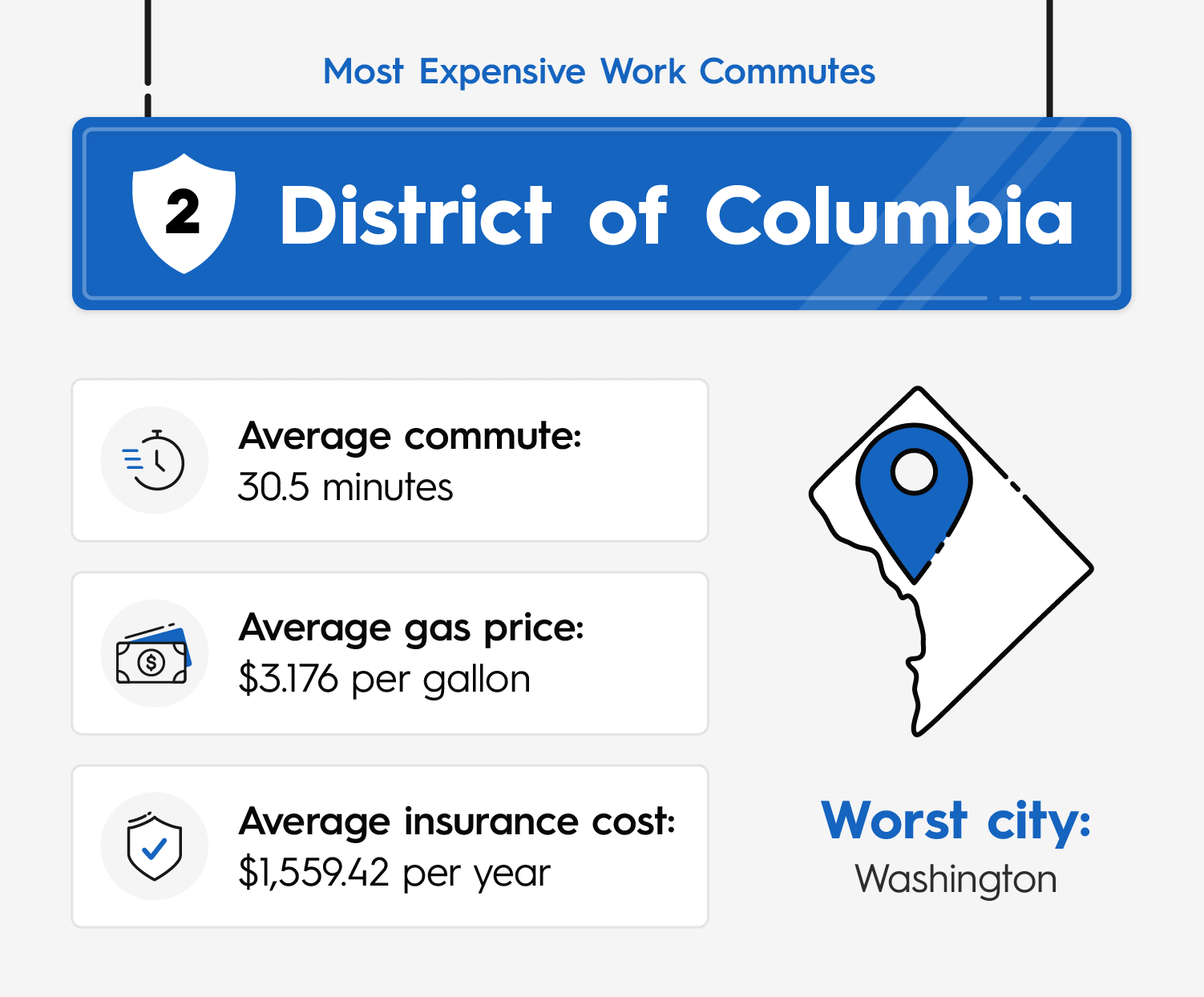
Washington, DC, ranks as the second most expensive place for commuting, driven by a mix of long commute times, elevated gas prices, and high car insurance premiums.
The average last-mile speed in DC is just 11 mph, emphasizing the inefficiency of driving in urban areas, where stop-and-go traffic burns more fuel and increases vehicle maintenance needs.
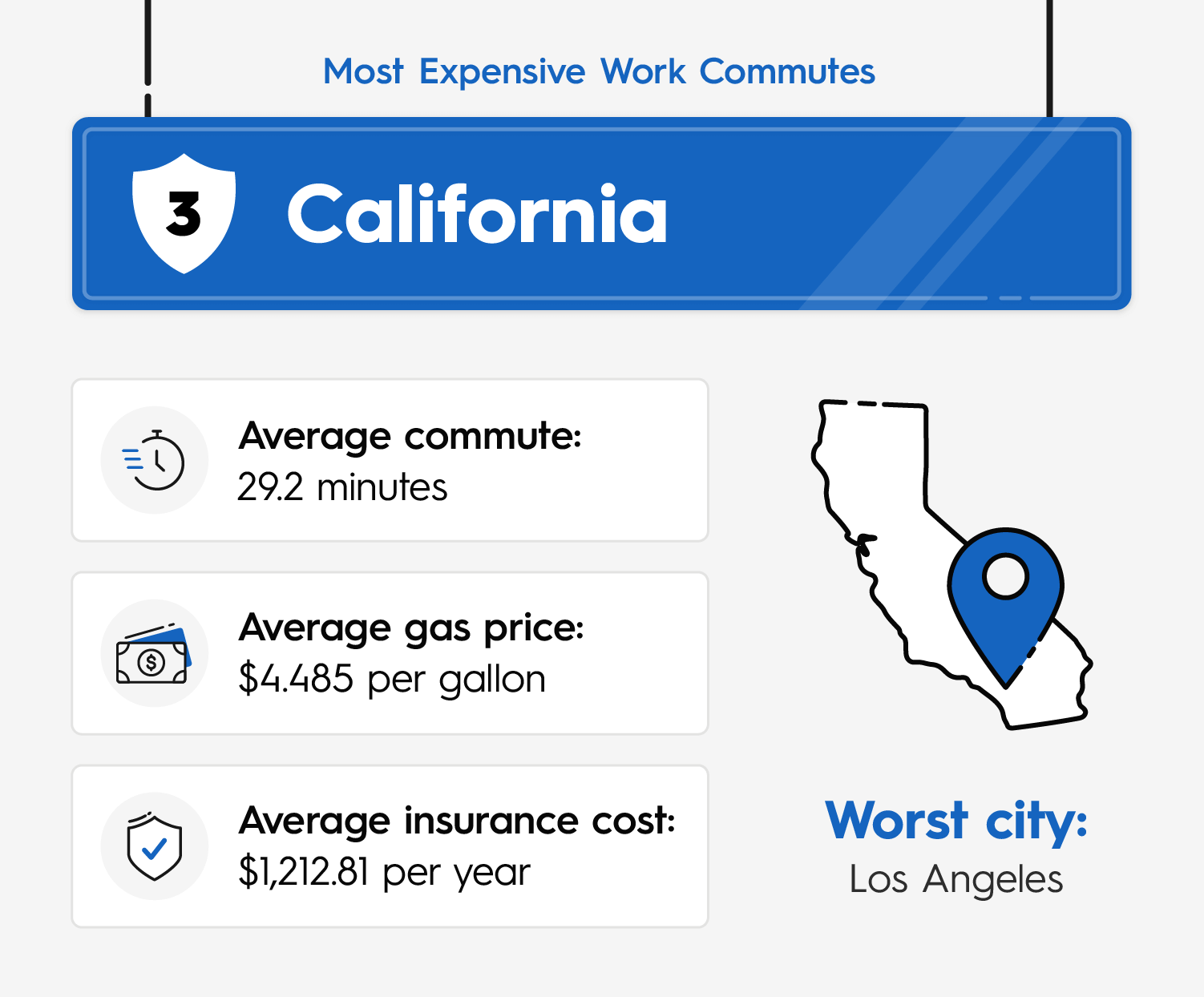
California ranks third among the most expensive states for commuting, largely due to its high gas prices and lengthy travel times.
LA’s infamous traffic lives up to its reputation. With an average last-mile speed of 19 mph, drivers face slowdowns that extend commute times, resulting in inefficiencies like excessive idling and frequent stops.
As a state, California has fewer refineries than other parts of the country and more strict environmental regulations than the federal government’s gasoline program. Both factors contribute to the high cost of gas in the Golden State.
However, by reducing their reliance on a car and opting for walking, cycling, or carpooling, Californians could see a significant decrease in their annual premium. They can help the environment by reducing emissions, while simultaneously saving some money.
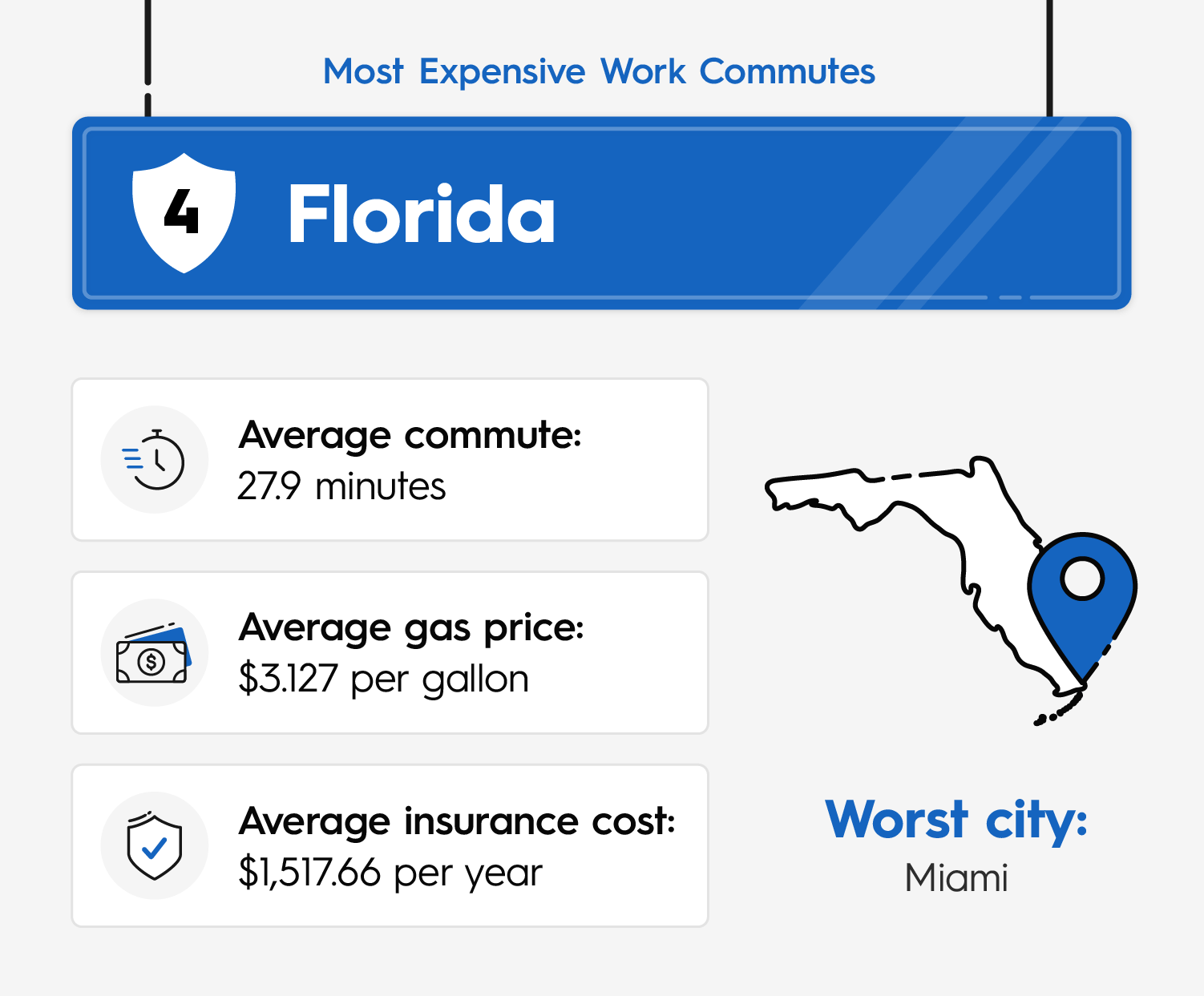
The fourth most expensive state for commuters is Florida, with above-average car insurance premiums and commute times.
The city’s average last-mile speed of 14 mph underscores the gridlock that slows drivers, particularly in downtown areas and along major highways. These delays not only extend travel times but also contribute to fuel inefficiencies and driver frustration.
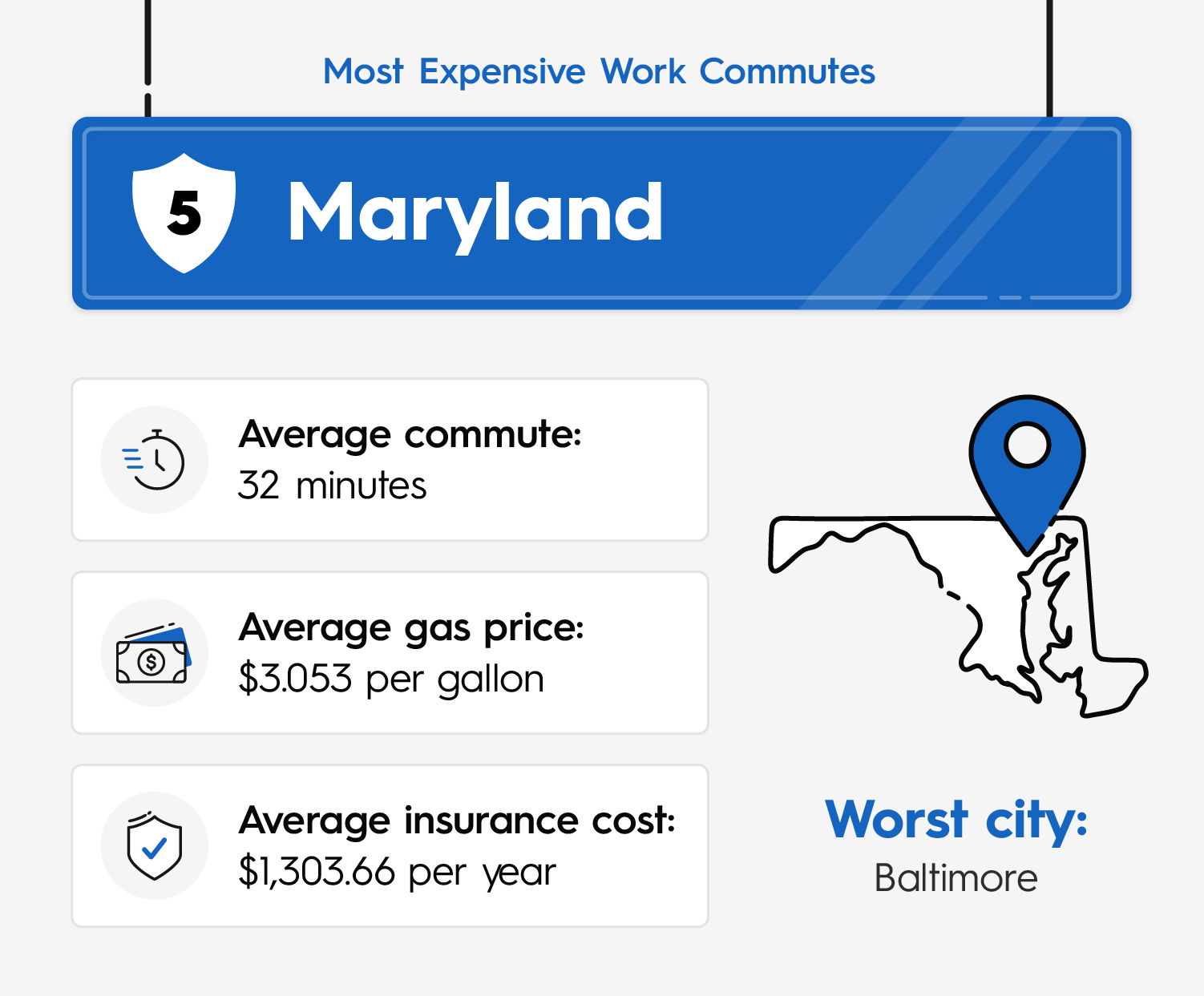
Maryland lands fifth on the list of the most expensive states for commuting, with high car insurance premiums and lengthy travel times contributing to the financial strain on residents.
With an average last-mile speed of just 13 mph, navigating the city’s streets is slow and frustrating, particularly during peak travel hours. These delays amplify the time and cost burden for commuters, whether traveling within Baltimore or to nearby regions.
| State | Average Commute Time (minutes) | Average Gas Price | Average Car Insurance Premium |
|---|---|---|---|
| 1. North Dakota | 17.9 | $2.925 | $823.56 |
| 2. Iowa | 19.6 | $2.847 | $841.62 |
| 3. South Dakota | 17.4 | $2.862 | $958.72 |
| 4. Wisconsin | 22.2 | $2.839 | $824.23 |
| 5. Nebraska | 19.1 | $2.806 | $983.01 |
For drivers in the five least expensive states, commuting offers a far more manageable impact on both finances and time. With shorter travel distances, lower gas prices, and more affordable car insurance premiums, residents in these states can enjoy significant savings compared to their counterparts in costlier regions.
In addition to financial benefits, less congested roads and shorter commutes often translate into a better quality of life. Drivers spend less time stuck in traffic and more time focused on what matters most.
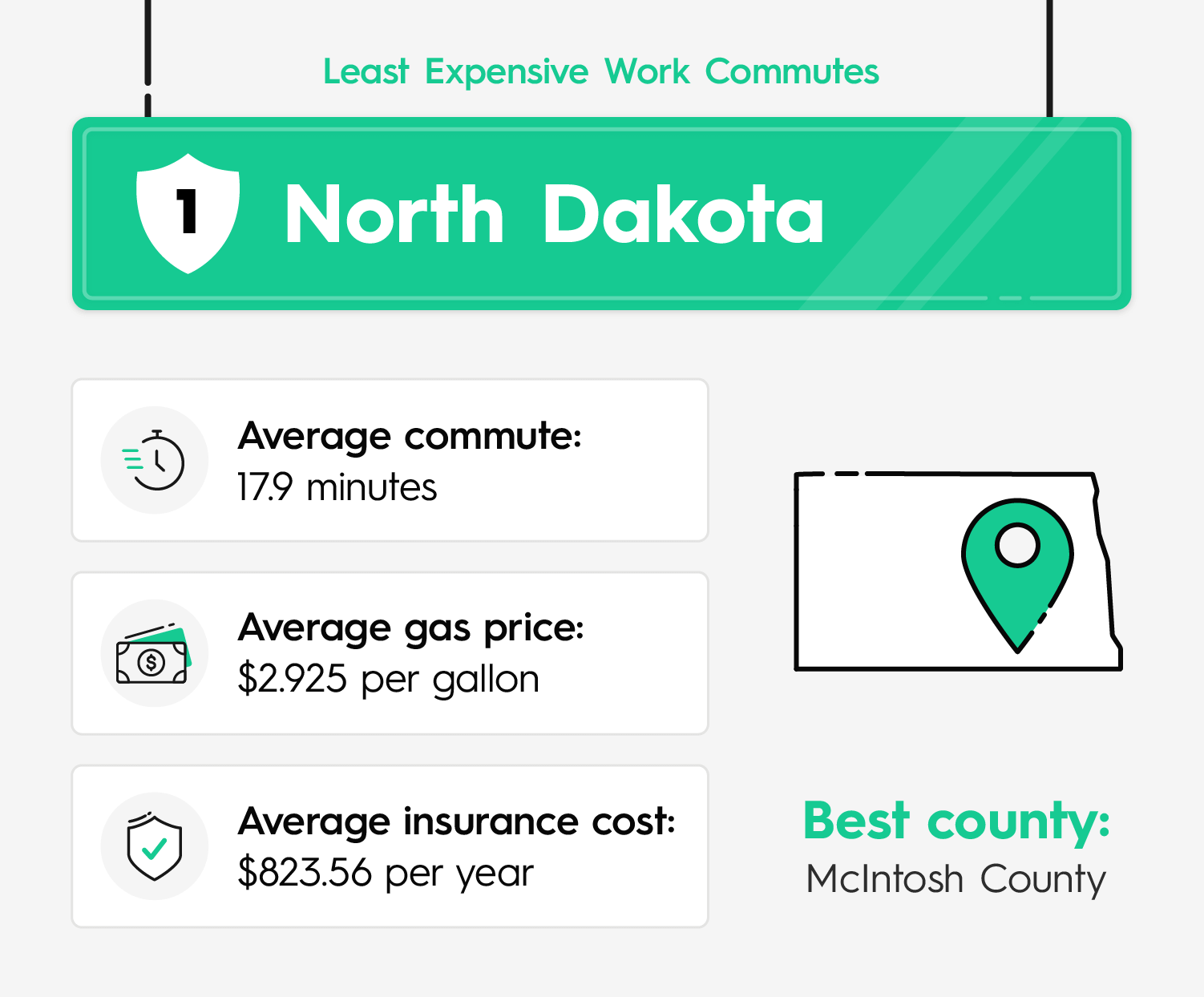
North Dakota claims the top spot as the least expensive state for commuting, offering residents significant financial and time-saving advantages.
With no reliable data on cities with the best commutes in the least expensive states, we turned to county-level data for North Dakota and the other least expensive commute states.
McIntosh County’s localized commuting pattern, combined with the state’s open roads and minimal congestion, allows McIntosh County residents to enjoy efficient and low-cost commutes.
North Dakota’s unique combination of affordability and convenience highlights the advantages of living and working in less congested areas. Together, these factors create a cost-effective environment for commuters, making it easier for residents to balance work and personal expenses.
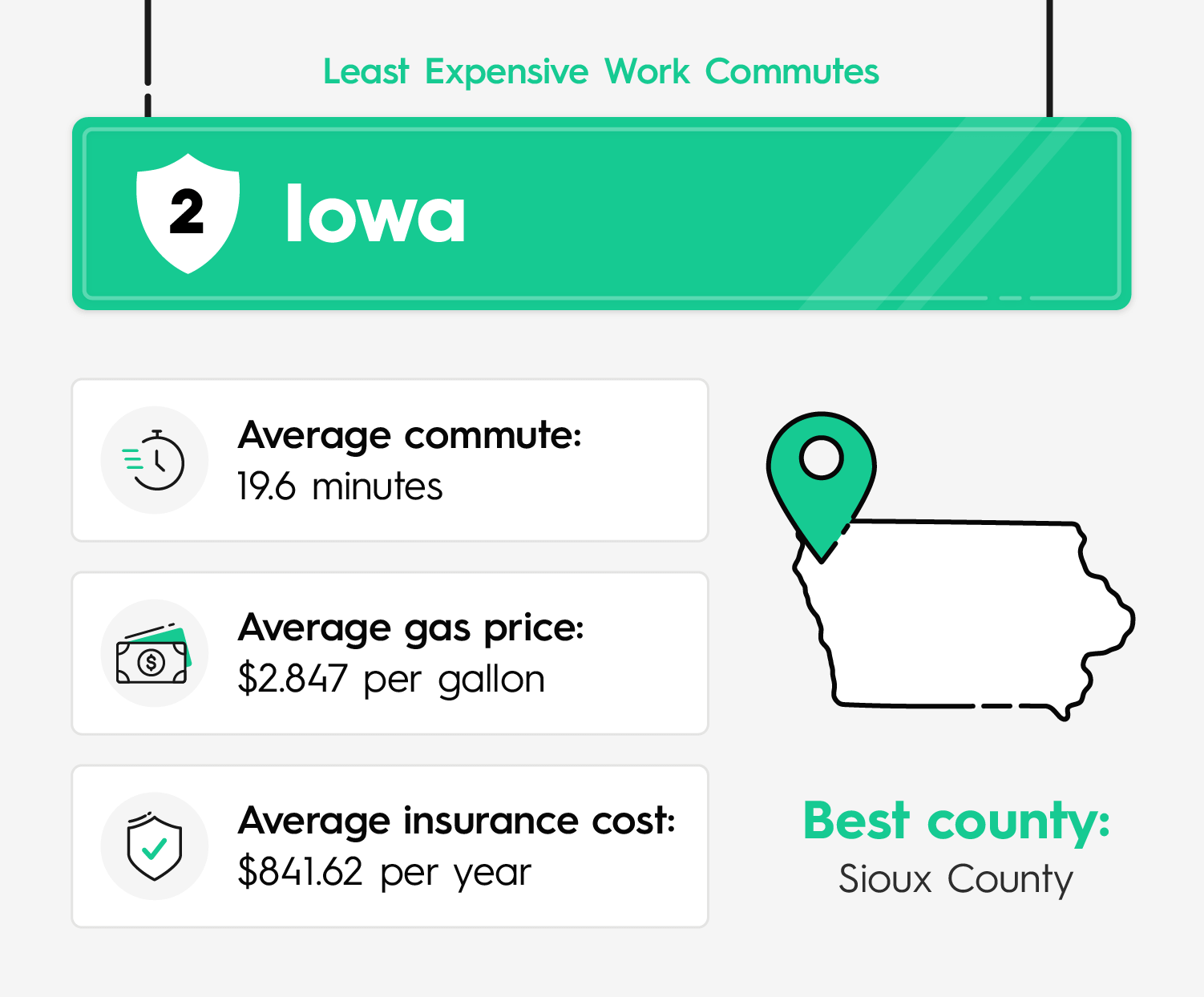
Iowa ranks second among the least expensive states for commuting, offering residents a combination of both time and cost savings.
When combined, these factors make Iowa a prime example of how efficient roadways and affordable essentials can simplify the daily commute.
The strong local employment base and absence of major traffic bottlenecks make commuting in Iowa’s rural and suburban regions highly efficient. With shorter travel times and smoother drives, residents enjoy a mostly stress-free and cost-effective journey to work.
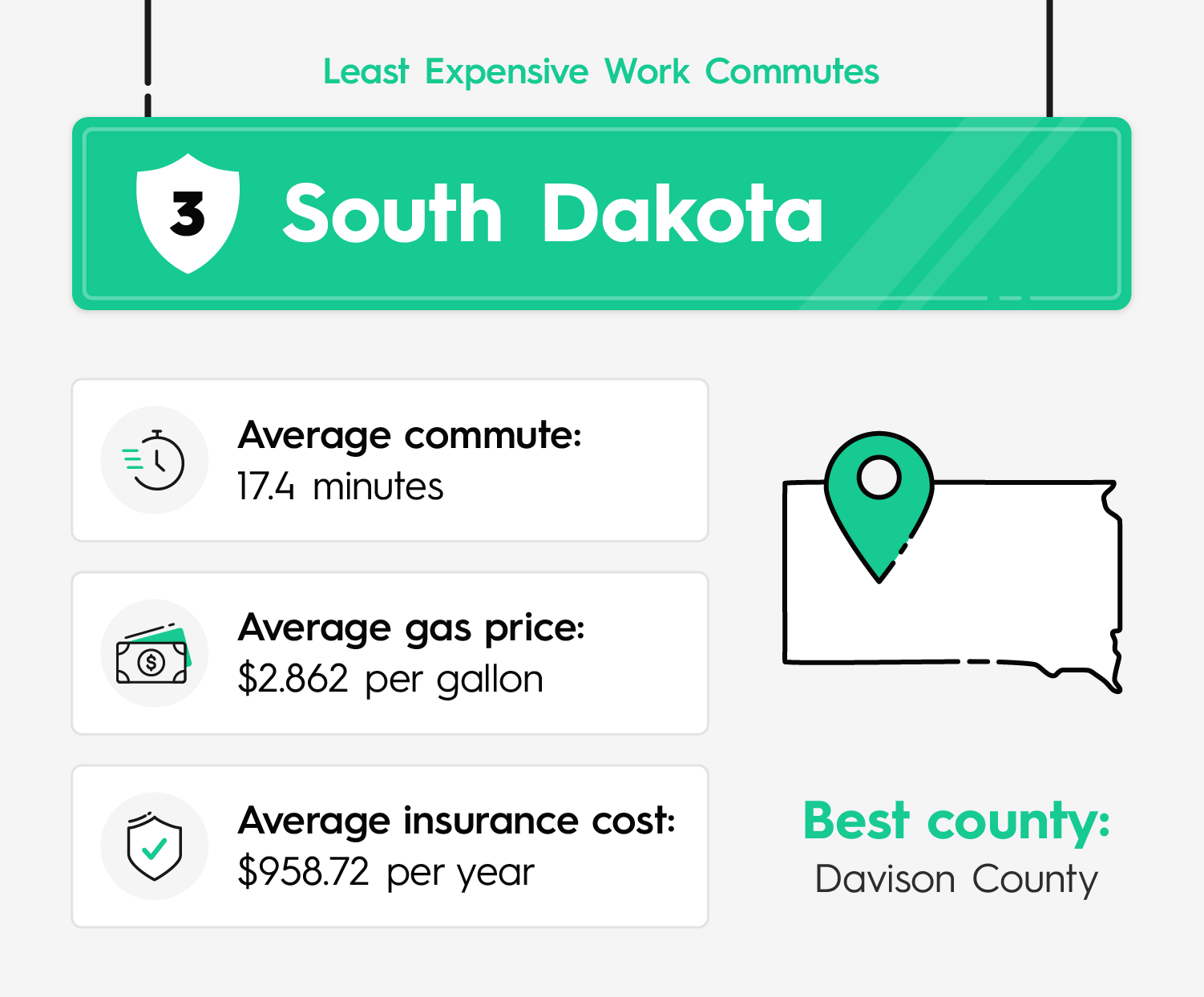
South Dakota ranks third among the most budget-friendly states for commuting.
This combination of short travel times and localized employment opportunities highlights the financial convenience of living and working in South Dakota. With open roads and minimal congestion, commuting here is affordable and low-stress, offering residents more time and resources to dedicate to their personal lives.
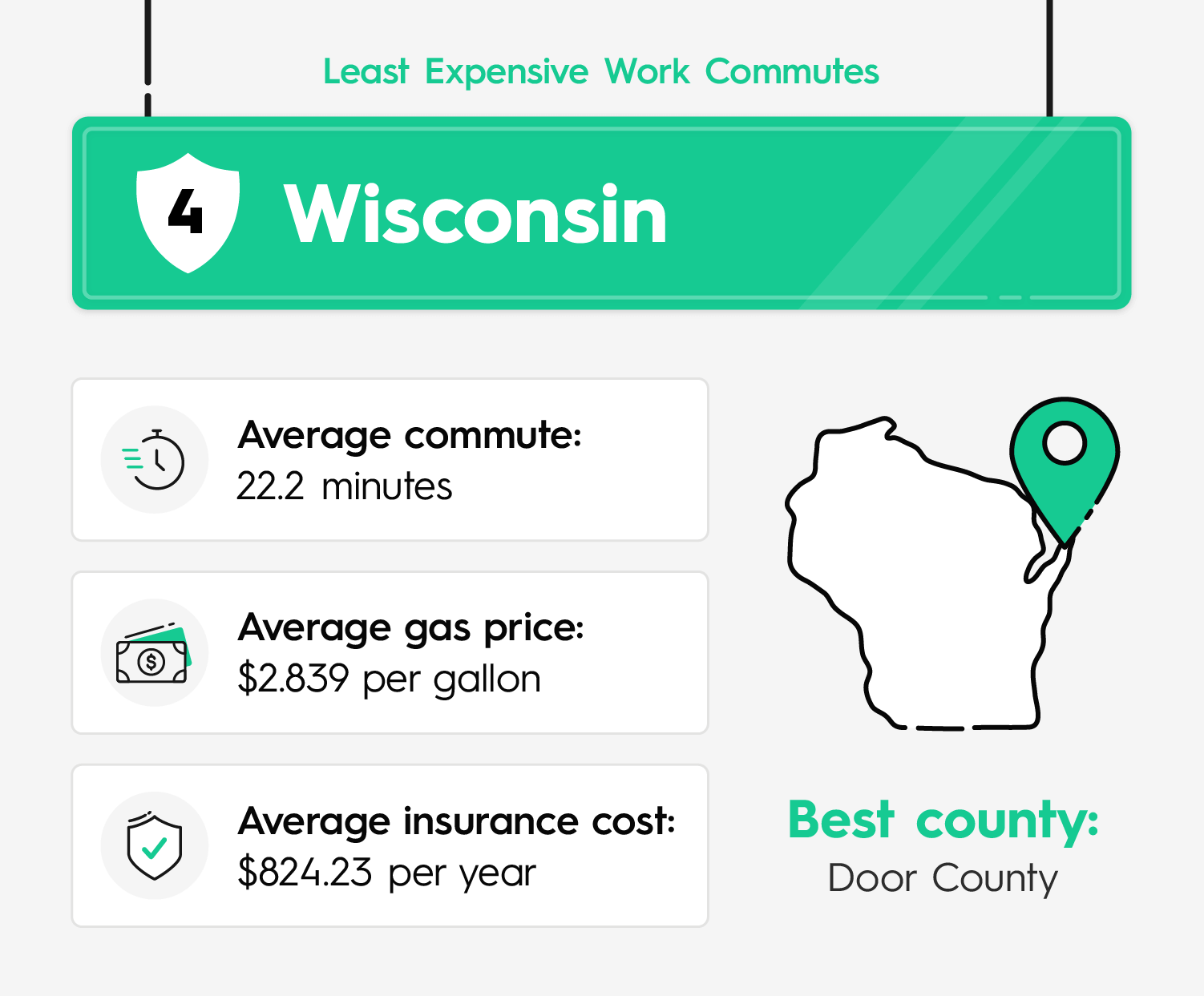
The state of Wisconsin offers the fourth least expensive commute for workers.
While 9.7% of residents commute outside the county for work, only 2.9% of residents commute over an hour. The proximity of job opportunities within the region ensures minimal disruption to daily routines.
Wisconsin’s commuting conditions, as seen in Door County, emphasize more than just cost savings. The predictability and accessibility of travel reduce stress for residents, promoting a lifestyle that balances affordability with practical convenience.
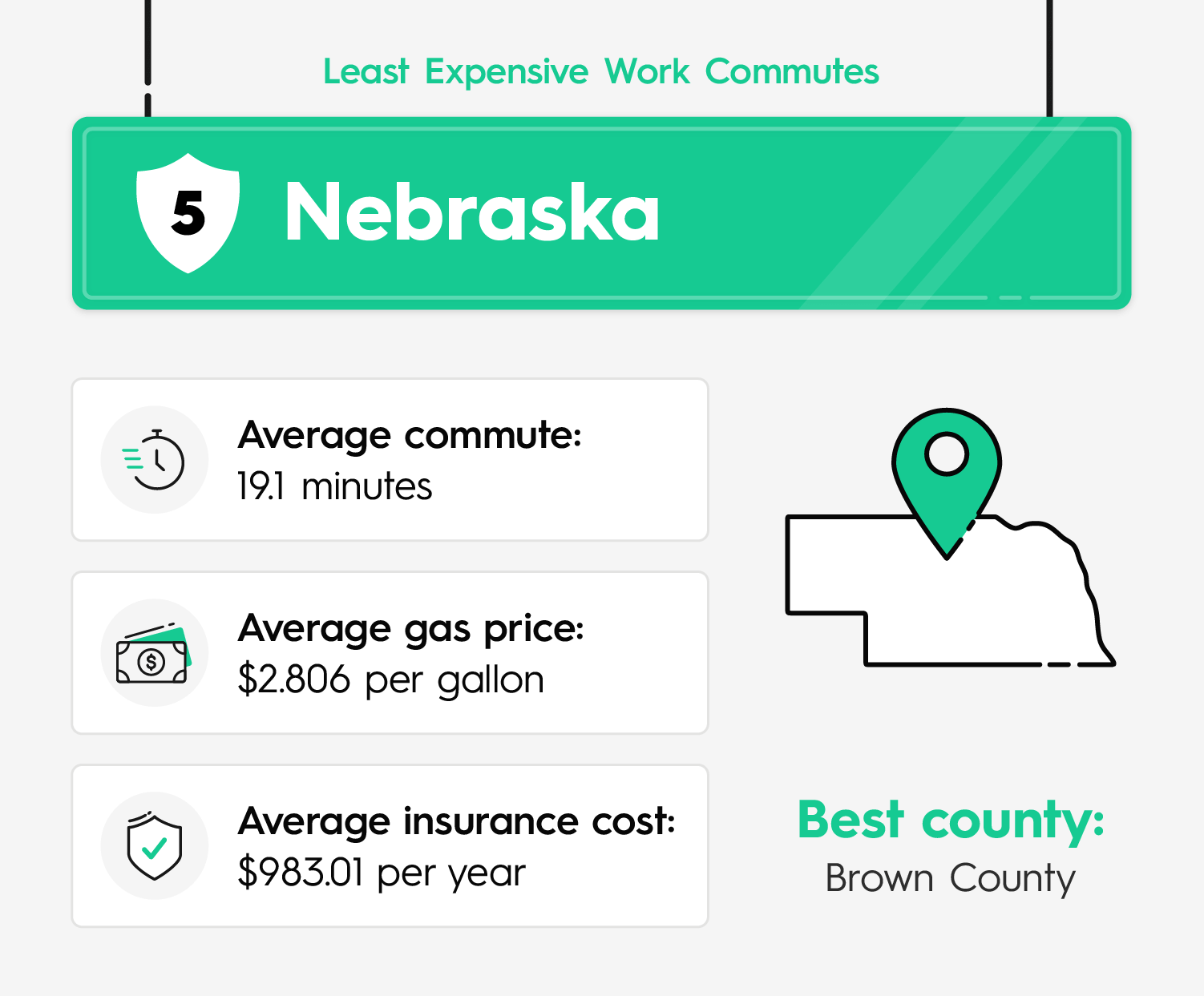
Nebraska is the fifth least expensive state for commuting, thanks to its efficient travel times and low fuel and insurance costs.
The Brown County statistics illustrate the benefits of local employment opportunities and Nebraska’s rural infrastructure, allowing smooth and quick travel. For commuters across the state, Nebraska offers a stress-free and cost-effective commuting experience, enhancing overall quality of life.
Commute costs and experiences are shaped by several key factors that vary significantly based on location, individual choices, and broader economic conditions. Understanding these elements can help commuters identify areas for potential savings or lifestyle adjustments.
Let’s examine the primary factors influencing commute costs:
While the financial benefits of a less expensive commute are undeniable, the advantages extend far beyond dollars and cents. A shorter or more cost-effective commute can significantly enhance your quality of life.
Reducing the costs of your daily commute doesn’t have to require drastic changes. Simple, actionable strategies can lead to significant savings over time.
Switching to a more fuel-efficient car can lead to noticeable savings on your daily commute. These vehicles tend to have higher miles per gallon (MPG), so you'll spend less on gas, especially during long commutes.
Smaller cars also typically come with lower insurance premiums. This is because they are less expensive to repair and pose a lower risk of causing major damage in an accident. Insurance companies factor in the vehicle's value, repair costs, and safety features when setting rates, so a smaller, more efficient car can also translate to lower insurance costs.
Switching your car insurance can yield significant savings by ensuring your policy fits your needs. Factors like driving habits, vehicle usage, and coverage requirements can influence premiums, so regularly reviewing options is key.
When comparing providers, focus on more than just cost. Look for coverage levels, deductibles, and additional perks like accident forgiveness or roadside assistance. Adjusting your policy to reflect recent changes, such as reduced mileage, might unlock discounts on your car insurance.
By carpooling or using rideshare services, you can split the cost of gas, tolls, and parking with others, reducing your overall transportation expenses. This is especially beneficial for longer commutes, where these costs can add up quickly.
In addition to saving money, carpooling offers environmental benefits by reducing the number of cars on the road, which lowers emissions and traffic congestion. A lower mileage could also reduce your car insurance premiums, as some providers offer discounts for lower mileage.
Regular vehicle maintenance is key to improving fuel efficiency and avoiding costly breakdowns. Simple tasks like checking tire pressure, changing the oil, and replacing air filters can help your car run more efficiently, saving you money on fuel over time.
A well-maintained vehicle is also less likely to experience major issues, which can lead to expensive repairs and unexpected downtime. But a well-kept car can also impact your insurance premiums.
Many insurance companies consider the condition of your vehicle when determining rates, with newer or better-maintained cars often receiving lower premiums. This is because a well-maintained vehicle is less likely to be involved in accidents or require expensive repairs, which lowers the insurer's risk.
Using public transportation is one of the most cost-effective ways to reduce commuting expenses. It typically costs a fraction of the price of driving, saving you money on gas, parking, and maintenance.
In many cities, monthly passes offer additional savings, providing unlimited travel for a fixed fee. This can be particularly beneficial for commuters who face long distances or high parking fees.
Public transportation also offers convenience and stress relief. It allows you to avoid the hassle of traffic and the stress of finding parking, offering a more relaxed commute. For many, public transportation offers a smoother and more predictable daily routine.
Working remotely eliminates the daily commute, cutting costs on gas, car maintenance, and parking. With less time spent driving, your car insurance premiums may also decrease due to lower mileage, reducing the risk of accidents and wear on your vehicle.
Remote work also offers flexibility and boosts work-life balance. By cutting out the commute, you gain extra time for personal activities, which can reduce stress and increase overall productivity. Discussing remote work options with your employer can lead to both financial and personal benefits.
Based on our findings, states with longer commutes, higher gas prices, and expensive insurance premiums can place a large financial burden on drivers. And states with shorter travel times and lower costs offer notable savings.
Whether you're looking to cut down on expenses in a high-cost state or maximize savings in an affordable one, re-evaluating your car insurance can be a smart first step. Use BestMoney’s car insurance comparison tool to explore plans that help keep more money in your pocket.
This state study was completed using data sourced in November 2024. We gathered publicly available data from the U.S. Census Bureau on the mean travel time to work in every state, average regular gas prices from Gas Buddy, and the combined average auto insurance premiums from the National Association of Insurance Commissioners.
The NAIC defines “combined average premiums” as the sum of liability insurance average premiums plus collision average premiums plus comprehensive average premiums.
Weights for each metric are available below:
The BestMoney editorial team is composed of writers and experts covering a full range of financial services. Our mission is to simplify the process of selecting the right provider for every need, leveraging our extensive industry knowledge to deliver clear, reliable advice.
