- Home/
- Personal Loans/
- The Summer Debt Trap: Why 45% of U.S. Households Now Find Summer More Stressful Than the Holidays
The Summer Debt Trap: Why 45% of U.S. Households Now Find Summer More Stressful Than the Holidays
August 6, 2026
August 6, 2026
Summer can also bring higher-than-anticipated utility bills and unexpected home repairs. Summer camp payments or babysitting bills can add up too. For many, the "double-whammy" of seasonal costs and the social pressure to spend is a financial tightrope walk.
A recent BestMoney survey revealed that summer may be quietly dethroning the winter holidays as the most financially stressful time of the year. Faced with budget shortfalls, many consumers panic-swipe high-interest credit cards to stay afloat. That sets up a financially difficult fall. Understanding the summer debt trap is the first step to avoiding it.
Credit card balances typically rise in the fourth quarter, and Federal Reserve data confirms the pattern. Balances rose $44 billion in Q4 2025 before falling $25 billion in the first quarter of 2026. But our survey found something surprising. Nearly half of respondents (45%) say summer strains their finances more than the winter holidays do.
The difference may be less about timing than about control:
In My Opinion: As a personal finance writer, I've seen this play out in my own household. Unlike the holidays, where you can set a limit and stick to it, summer costs sneak up; sunscreen and bug spray add up more than you'd think. We've paid for surprise weekend guests and last-minute amusement park invites for the kids, and my credit card bills are noticeably heftier by September. Overspending can happen any season, but summer's lack of routine seems to drive more day-to-day spending.
The primary drivers of summer financial stress aren't luxury vacations abroad, but the impact of being a homeowner or renter at a time when utility costs are rising, along with the heat index.
In our survey:
The National Energy Assistance Directors Association projected in June 2026 that the average household would spend about $792 on electricity this summer, up more than 10% from last year.
"Families are getting hit from both sides. Electricity prices continue to rise, and hotter summers mean households need to use more electricity simply to stay safe."
— Mark Wolfe, Executive Director, NEADA
Adding to those costs could be a repair, such as replacing a failed AC compressor, which could cost between $800 and $2,300. In America, the median amount of cash on hand for emergencies is $500, so it's not surprising that 43% of our respondents said an unexpected $1,000 would push them into debt.
While utility bills are a common stressor, social pressure is often strong during those hot summer months. Between your colleagues' travel posts on Instagram and direct invitations from friends and family, the season can create steady pressure to spend. In our survey, 53% of respondents said they had taken on debt to avoid missing out on shared experiences such as weddings, group trips, and concerts.
Among our respondents who borrowed for summer experiences, 36% said they regretted the financial impact. Taking on debt for a major life event isn't always wrong, but doing it impulsively, without a repayment plan, can create financial stress.
Dr. Erika Rasure, chief financial wellness advisor at Beyond Finance, speaks regularly with clients about avoiding exactly this. She suggests a few concrete steps:
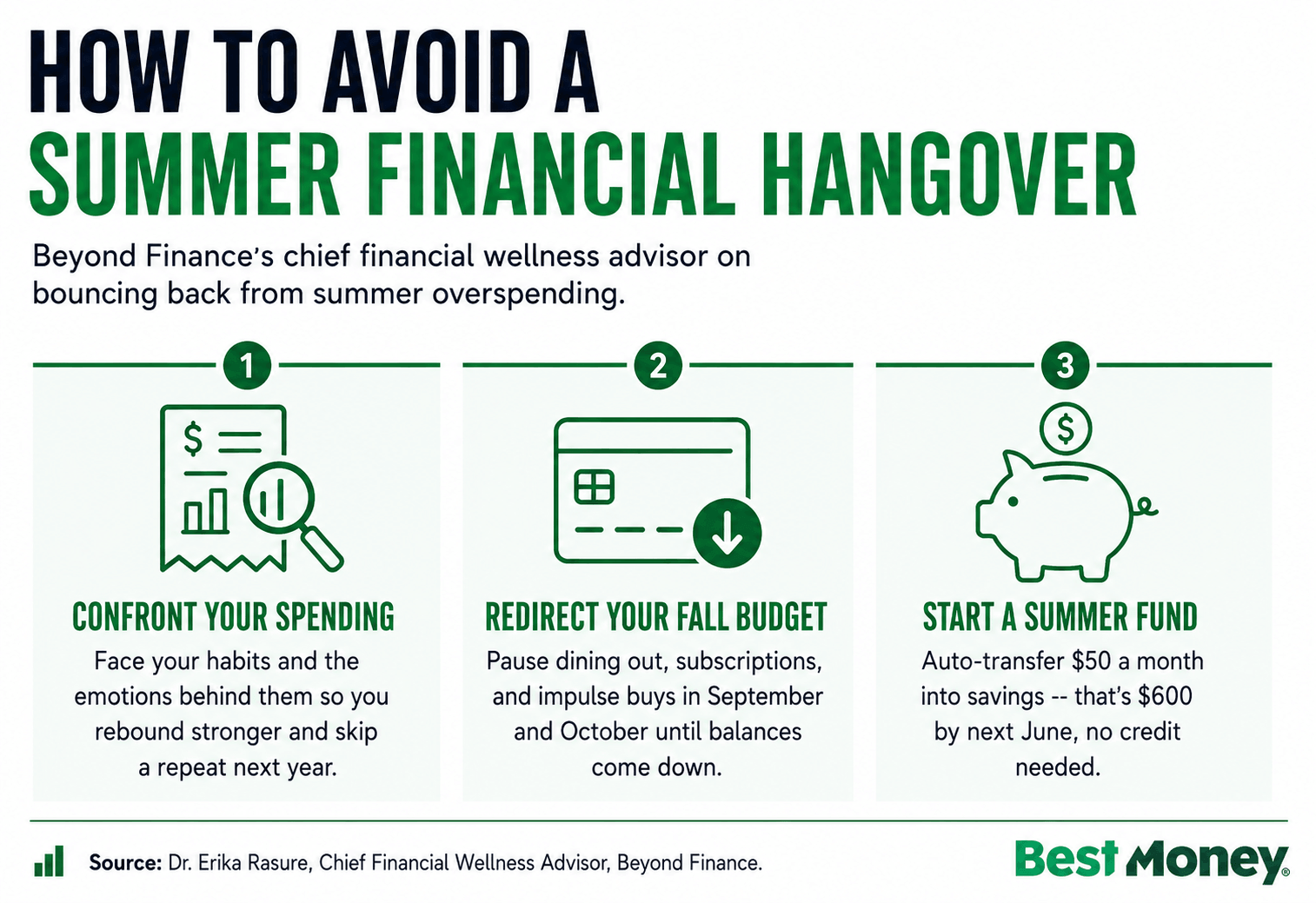
When faced with these compounding costs, how do people cover the gap? In our survey, 38% of respondents said they would rely on a credit card. Separately, 26% named putting too much spending on credit cards as their single biggest financial regret of the summer.
Consider a $2,300 air-conditioner repair charged to a card at 22.15%. Making only the minimum payment, assuming 1% of the balance plus interest with a $35 floor:
Every dollar paying for a summer expense from years ago is a dollar not going into an emergency fund or retirement account.
If you're still unsure, looking at interest rates is a solid place to start:
Your own rate, however, depends on your credit profile, so confirm an offer beats what you're carrying now before you move anything. After you pay off your cards, make a point not to cycle back into debt by either freezing or canceling your accounts. However, if you do the latter, it can impact your credit, according to the Consumer Financial Protection Bureau.
There's a more deliberate alternative to reaching for your credit card when expenses climb in the summer, or any season. In our survey, the top reasons respondents said they would take out a personal loan this summer were home repairs (29%) and consolidating existing credit card debt (22%).
Credit cards make it hard to resolve debt due to variable rates and no set end date for paybacks. A personal loan gives you a lump sum at a fixed rate, a fixed monthly payment, and a payoff date you can circle on a calendar, which alone can make it a better choice for some consumers.
That said, offers vary widely by lender and by your financial profile, with the lowest advertised rates generally reserved for borrowers with excellent credit. Researching personal and debt consolidation loans is usually the first step to understanding your rates.
When it comes to borrowing for summer costs, the real emergencies are usually the most important to cover. If you don't have the savings to pay for a broken air conditioner or a broken-down car on its way to a vacation spot, the real choice comes down to what kind of debt you should hold.
A fixed-rate personal loan comes with a set monthly payment and a real payoff date, which a revolving credit card balance never does. If you qualify for a rate below what your card charges, you'll pay less and you'll be done sooner. Check your rate first, since offers vary with credit profile, but for many borrowers that comparison favors the loan.
"Think of personal loans or credit as a 'break-glass-in-case-of-emergency' tool, not a lifestyle subsidy. Personal loans can serve a purpose for structural financial moves, like consolidating high-interest debt, when you have a clear plan and steady cash flow to repay them. However, taking out a loan to purchase social capital or fund perishable experiences (like vacations or nights out) is rarely a wise move. If you can't afford a lifestyle expense with cash on hand, taking out a loan is simply borrowing stress from your future." — PhD, MBA, Certified Financial Therapist
Planned expenses are where you have the most control, because you have time. If you know in January that the family reunion in July means $5,000 in flights and lodging, those four months are the asset.
Setting aside what you can each month shrinks the gap, and whatever's left is a much smaller decision than the whole $5,000 charged the week the deposit is due. Some people will still finance part of it. The difference is that it's a deliberate choice about a known amount that you saved for in advance.
September can be a good time to reset your finances before the holiday season takes hold. Options include consolidating high-rate card balances into one fixed-rate loan to cut what you pay in interest and provide a built-in payback schedule.
So, yes, for many, summer is the most expensive season, but you can cut down on the stress. The households that come out of it in good shape usually aren't the ones who spent less, they just planned better, even setting aside money for emergencies that may or may not appear.
The findings in this article are based on the proprietary survey, "The Real Cost of Summer Survey: From Vacation Budgets to Emergency AC Repairs," conducted by BestMoney.
The survey polled 1,047 respondents online. The survey utilized a comprehensive questionnaire to assess the financial realities of consumers during the summer season. Respondents were asked to report on their biggest summer financial stressors, unexpected expenses, and borrowing habits, including their reliance on credit cards and personal loans to cover budget shortfalls.
Maya Dollarhide is a Journalist for bestmoney.com, specializing in personal finance and consumer lending. She earned her MS in Journalism from Columbia University and has written for TIME, Yahoo Finance, Investopedia, Bankrate, Forbes, CNN, and AARP. Her work focuses on creating SEO-driven content, developing K-12 financial literacy curriculum, and producing B2B content for financial services clients.