- Home/
- Credit Cards/
- Which Credit Cards Offer Lounge Access Without Flying Business Class?
Which Credit Cards Offer Lounge Access Without Flying Business Class?
March 26, 2026
March 26, 2026
While business class passengers enjoy quiet lounges with free food and comfortable seating, you're stuck at crowded gates paying airport prices.
Premium credit cards can change that, offering lounge access for annual fees starting at $95 instead of $2,000+ business class upgrades or $50 per visit.
This guide covers the best credit cards for airport lounge access in 2026, helping you travel in comfort without premium cabin prices — and without getting turned away at the door during peak hours.
Credit card lounge access allows you to enter airport lounges based on your card membership rather than your ticket class, airline status, or by paying a per-entry fee. This benefit transforms economy travel by providing the same comfortable waiting areas, free food and beverages, and quiet workspaces that business class passengers enjoy.
Most premium credit cards include lounge access as a core benefit, either through their own lounge networks or through partnerships with services like Priority Pass. You simply show your eligible credit card and boarding pass to enter participating lounges, regardless of which airline you're flying or what ticket you purchased.
More and more banks have premium credit cards that come with lounge access, including Chase, American Express and Capital One, but make sure whatever card you sign up for has enough lounges in its network to justify the hefty annual fee.
These cards provide the most comprehensive lounge access for travelers who want premium airport experiences without purchasing business class tickets.
| Card | Annual Fee | Primary Network | Guest Policy | Break-Even Visits | Best For |
|---|---|---|---|---|---|
| Chase Sapphire Reserve | $795 | Priority Pass + Chase Sapphire Lounges | 2 free guests | 6 visits | Flexible frequent flyers |
| American Express Platinum Card® | $895 | Centurion + 4 networks | Varies by lounge | 18 visits (full benefit stack needed) | Premium lounge experience |
| Capital One Venture X | $395(effective $95 after $300 travel credit) | Priority Pass + Capital One Lounges | Unlimited (Charge per guest) | 2 visits | Solo travelers, value seekers |
Atmos™ Summit Visa Infinite | $395 | Alaska Lounges (8 passes/year) | Included in passes | 7 passes | Alaska/Hawaiian flyers |
Delta SkyMiles® Reserve | $650 | Delta Sky Club + Centurion (when flying Delta) | Paid guests | 13 visits | Delta loyalists |
United Club℠ Card | $695 | United Club (full membership) | 2 free guests or family | 12 visits | United loyalists |
United℠ Explorer | $150 | 2 United Club passes/year | N/A | 2 passes used | Entry-level lounge access |
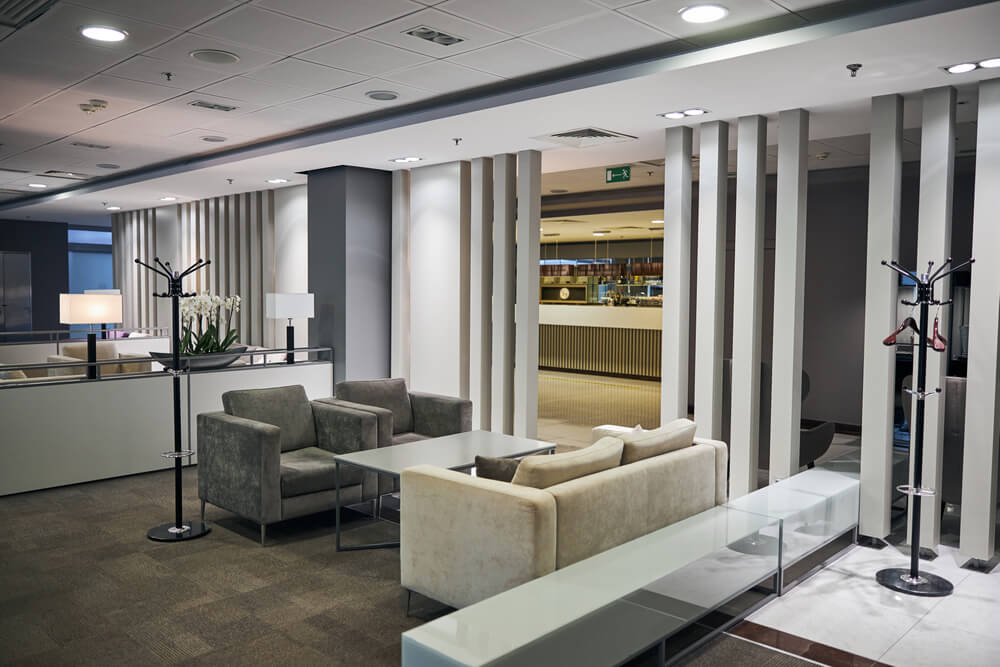
A single airport day pass costs $35–$59, depending on the network.
Card | Annual Fee | Visits to Break Even |
Capital One Venture X | $395 | 2 visits |
Atmos™ Summit Visa Infinite | $395 | 7 passes used |
Chase Sapphire Reserve | $795 | 6 visits |
United Club Card | $695 | 12 visits ($59/day pass) |
Delta SkyMiles Reserve | $650 | 13 visits |
Amex Platinum | $895 | 18 visits (lounge only — needs full benefit stack) |
Rule of thumb: If you fly 6+ times per year, a premium lounge card almost always beats paying per visit. For lower travel frequency, the Venture X or United Explorer are examples of cards where the math works on lounge access alone.
We evaluated cards based on four criteria: lounge network breadth, guest policy value, break-even visit count at realistic travel frequency, and fit for specific traveler profiles. Cards were selected to cover every major traveler type — from the occasional flyer to the airline loyalist. We excluded cards where the lounge benefit is too limited (e.g., 2 passes/year on a $600+ fee) to stand as a primary lounge access strategy.
Best for: Frequent flyers who want flexibility across airlines
Annual Fee | $795 |
Lounge Networks | Priority Pass Select, Chase Sapphire Lounges |
Guest Policy | 2 free guests at Priority Pass locations |
Break-Even | 6 visits at $50/visit |
The Chase Sapphire Reserve is the best all-around option for travelers who don't want to be tied to a single airline. Priority Pass Select gives you access to 1,300+ lounges worldwide, while Chase's own Sapphire Lounge network — currently open in Boston, Las Vegas, New York (JFK & LaGuardia), Philadelphia, Phoenix, San Diego and Hong Kong, with more locations planned — offers a proprietary premium experience that's less crowded than Centurion.
The $795 annual fee is offset by $300 in travel credits and $500 for The Edit bookings, making the effective cost $295 for frequent travelers who use both credits. You get two free guests at Priority Pass locations, plus comprehensive travel protections.
Pros:
Priority Pass covers virtually every airport globally
Chase Sapphire Lounges use digital reservation systems — reducing "lounge full" risk
$300 annual travel credit offsets more than one-third of the fee
Comprehensive travel protections (trip cancellation, delay coverage, primary rental car)
2 free guests at Priority Pass locations
Cons:
Annual fee requires actively using multiple benefits to justify
Sapphire Lounge network still limited compared to Centurion footprint
Priority Pass access excludes some restaurant credits depending on card version
Productivity Score: Elite
Quiet pods and dedicated workstations at Chase Sapphire Lounges make this the best card for remote workers and road warriors who actually need to get work done between flights.
Best for: Travelers who prioritize the premium lounge experience above everything else
Annual Fee | $895 |
Lounge Networks | Centurion, Priority Pass, Delta Sky Clubs, Plaza Premium, Escape |
Guest Policy | Varies by lounge; Centurion has stricter guest rules |
Break-Even | 18 visits (lounge only) — full benefit stack required to justify fee |
American Express Platinum Card® provides the widest lounge access of any card — five networks covering virtually every major airport worldwide. Centurion Lounges deliver the most premium food and beverage experience in U.S. airports, with restaurant-quality dining and full bar service. The tradeoff: Centurion Lounges at major hubs have become genuinely crowded during peak hours, and guest policies have tightened compared to prior years.
The $895 annual fee requires maximizing multiple card benefits beyond lounge access to justify the cost, but delivers the highest-quality lounge experiences.
Pros:
Access to 5 lounge networks — the widest of any card
Centurion Lounge food and beverage quality is best-in-class domestically
1,500+ lounge options through the Global Lounge Collection
Strong international coverage through Priority Pass + Centurion global locations
Cons:
Annual fee requires using credits across Saks, travel, dining, and more to break even
Centurion Lounges face capacity issues at peak times — access not guaranteed
Guest policies stricter than prior years at Centurion locations
Break-even on lounge access alone requires 18+ visits annually
Productivity Score: High (with caveats)
Centurion Lounges offer phone booths and quiet seating areas, but peak-hour crowding at major hubs (JFK, LAX, MIA) can undermine the work environment. Best at off-peak times or secondary airports.
Best for: Solo travelers and anyone who wants maximum value at minimum net cost
Annual Fee | $395 |
Lounge Networks | Priority Pass, Capital One Lounges (Dallas-Fort Worth, Washington Dulles, Denver) |
Guest Policy | Fee per guest (capacity permitting) at Capital One Lounges |
Break-Even | 2 visits at $50/visit |
Capital One Venture X delivers the best value proposition on this list. At an effective $95 annual fee after the travel credit, two lounge visits per year covers the card's net cost entirely. Capital One's own lounges in Dallas, Denver, and Dulles punch above their weight on food and design. The card also provides 10,000 anniversary miles annually.
2026 Update: Authorized User Lounge Access Capital One updated its authorized user policy in early 2026. Additional cardholders may now require a separate fee to access lounges independently. If you plan to share lounge access with a partner or family member, verify the current authorized user policy directly with Capital One before applying.
Pros:
Lowest effective annual fee of any full Priority Pass card
Unlimited guest access at Capital One Lounges
10,000 anniversary miles cover more than the effective fee in travel value
Capital One Lounge's food quality is genuinely competitive
Cons:
Capital One Lounge network is small
Priority Pass coverage is strong internationally but thinner domestically than airline-specific cards
Authorized user lounge access policy changed in 2026
Productivity Score: Good
Capital One Lounges offer solid WiFi and comfortable seating, with a modern design focused on quick meals and recharging. Not ideal for extended work sessions — more suited to a 90-minute layover than a 4-hour wait.

These cards offer strong lounge value for specific traveler types. Write-ups are shorter because each serves a narrower audience.
Best for: Alaska Airlines and Hawaiian Airlines flyers — 2026's breakout lounge card
Annual Fee | Lounge Access | Break-Even | Best For |
$395 | 8 Alaska Lounge passes/year (2 per quarter) | 7 passes used at $60/pass | West Coast and Pacific flyers |
The Atmos card operates on a pass model rather than unlimited membership — 8 passes per year, issued two per quarter. At $60 per Alaska Lounge day pass, 8 passes represent $480 in value against a $395 fee, making this card cash-flow positive on lounge access alone even if you only fly four times a year using two passes per trip.
2026 Update: Atmos Ecosystem Alaska Airlines and Hawaiian Airlines points merged into the unified Atmos rewards ecosystem in 2026. If you hold miles in either program, check your current Atmos balance — miles transferred automatically. This makes the card relevant for a broader Pacific and West Coast traveler base than the old Alaska-only positioning.
Best for: West Coast-based travelers, Hawaii route regulars, and anyone flying Alaska frequently out of SEA, PDX, SFO, LAX, or JFK.
Not ideal if: You fly multiple airlines and need flexible network access — the 8-pass limit becomes a constraint for travelers flying more than 8 times per year.
Best for: Delta loyalists flying out of Atlanta, New York, LA, or other Delta hub cities
Annual Fee | Lounge Access | Break-Even | Best For |
$650 | 15 Sky Club visits/year + Centurion access when flying Delta | 13 visits | Frequent Delta flyers |
The Delta Reserve gives you 15 complimentary Sky Club visits annually — enough for roughly monthly lounge access — plus entry to Amex Centurion Lounges on days you're flying Delta. The Centurion access is a genuine bonus: it's the same premium lounge network as the standalone Amex Platinum, included here as a secondary benefit.
Important limitation: The 15-visit cap is a real constraint. If you fly Delta more than 15 times annually, you'll hit the ceiling. Unlimited Sky Club access requires $75,000 in annual card spend — a high bar for most cardholders.
Best for: Delta flyers making 8–14 trips per year who want meaningful lounge access without paying the full Amex Platinum fee.
Not ideal if: Delta isn't your primary airline, or you fly more than 15 times annually without hitting the spend threshold.
Best for: United loyalists who want full club membership, not just passes
Annual Fee | Lounge Access | Break-Even | Best For |
$695 | Full United Club membership (unlimited) | 12 visits at $59/day | Frequent United flyers |
The United Club Card is one of only two cards on this list that provides full, unlimited lounge membership rather than a capped number of visits or network access. United Club day passes cost $59 — meaning 12 visits per year breaks even on the annual fee. For travelers who use United as their primary airline and visit lounges consistently, this is a strong value.
Best for: United flyers based in Chicago (O'Hare), Houston, Newark, San Francisco, or other United hubs who use the lounge on most trips.
Not ideal if: United isn't your primary airline — the lounge benefit only works at United Club locations and requires same-day United travel.
Best for: Infrequent travelers who want a taste of lounge access without a premium fee
Annual Fee | Lounge Access | Break-Even | Best For |
$0 yr 1, then $150 | 2 single-use United Club passes/year | Both passes used | Entry-level lounge access |
The United Explorer is the only card on this list that makes financial sense for travelers who fly fewer than 4 times per year. Two United Club passes at $59 each represent $118 in value against a $150 annual fee — meaning you need both passes and other card benefits to justify the cost. The first year is free, making it zero-risk to try.
Best for: Occasional United flyers who want lounge access a couple of times per year without committing to a $400+ annual fee.
Not ideal if: You fly more than 4 times annually — at that frequency, a Venture X or Sapphire Reserve pays off faster.
The right card depends on your travel frequency, home airports, primary airline, and how often you bring guests. Use these factors to narrow your choice:
Understanding access rules helps you maximize benefits while avoiding surprise restrictions or fees.
You need three things: a valid same-day boarding pass, the eligible credit card itself, and compliance with network-specific rules. Most lounges require all three at entry.
Valid boarding pass: You must be traveling that day. Some locations require departure within 3 hours; others allow access up to 24 hours before your flight.
Card presentation: The primary cardholder must typically be present. You cannot give your card to another person to use independently.
Network enrollment: Priority Pass requires enrollment through your card issuer's app or website before your first visit — you won't be able to enroll at the lounge door.
Guest policies are one of the most significant variables between cards — and for travelers who bring companions, the difference can be worth hundreds of dollars annually.
Priority Pass standards: Most cards allow 2 free guests, with additional guests charged $32–$50 each. Venture X provides unlimited free guests at Capital One's own lounges. Sapphire Reserve allows 2 free guests at Priority Pass locations.
Airline lounge restrictions: United Club Card includes 2 free guests or immediate family. Delta Sky Club access through the Reserve card typically charges for guests.
Capacity limitations: Even with valid access, popular lounges may restrict entry during peak hours. This is increasingly common at Centurion and Priority Pass locations at major hubs.
Lounge crowding has become a real problem at major hubs. Centurion Lounges at JFK, LAX, and MIA routinely reach capacity during morning and evening peak windows (6–9am, 4–7pm). Before arriving at the lounge:
Airport lounges have become de facto offices for remote workers and business travelers. The value extends well beyond food and drinks.
Productivity by network:
Chase Sapphire Lounges: Best for focused work — quiet pods, dedicated workstations, strong WiFi
Centurion Lounges: Phone booths and quiet areas available, but crowding at peak hours can undermine concentration
Capital One Lounges: Good WiFi and modern design, better suited to quick meal-and-charge stops than extended work sessions
Priority Pass (varies): Quality ranges widely — check LoungeBuddy ratings for specific locations
Client entertainment: Premium lounge access allows you to host clients and colleagues in comfortable environments at no additional cost — a genuine professional benefit.
Tax considerations: Business credit card annual fees, including lounge access, may be deductible as business expenses for self-employed professionals. Consult a tax advisor to confirm eligibility for your specific situation.
For international travel, Priority Pass is the most practical network — covering 1,300+ lounges in 148 countries. Airline-specific access may be limited to alliance hubs outside North America.
What matters internationally:
Network reach: Priority Pass wins on pure coverage. Centurion has locations in Buenos Aires, Delhi, Hong Kong, London, Melbourne, Mexico City, Mumbai, São Paulo, Sydney, Stockholm, and Tokyo.
Quality consistency: Centurion and Chase Sapphire maintain higher standards across global locations. Priority Pass quality varies significantly — some independent lounges are basic.
Shower access: Available at many international Centurion and Priority Pass premium locations — most valuable on overnight routes.
Long-haul specific value: Extended layovers on international routes are where lounge access delivers the clearest ROI. Rest areas, shower facilities, and full meal service on a 5-hour connection justify a full year's card fee on a single trip.
Not all lounge access is equal. Here's what each major network actually offers:
Admirals Club (American Airlines): Nearly 50 locations in 32 airports. Admirals Club members get access to 60+ partner lounges worldwide including Alaska Lounge locations. The Citi AAdvantage Executive card provides full membership.
Delta Sky Club: 50+ locations in 37 airports — the largest domestic airline lounge network. Quality is consistently good. Access is increasingly restricted by annual visit caps through credit cards.
United Club: 50 locations in 33 airports. Full membership through the United Club Card — unlimited access, which is the key differentiator vs. Delta's card-based cap.
Alaska Lounge: Smaller network — 6 airports including JFK. Higher quality per-location than most airline lounges. Atmos card provides 8 passes/year.
Amex Centurion: 28 locations worldwide (16 U.S., 12 international). Best food and beverage quality in the category. Increasingly crowded at major hubs — capacity restrictions are a real risk.
Chase Sapphire Lounge by The Club: Currently open at Boston, Las Vegas, New York (LaGuardia), Phoenix, San Diego. Strong quality, reservation-based access reduces crowding risk. Network expanding.
Capital One Lounges: Dallas-Fort Worth, Washington Dulles, Denver. Modern design, good food, strong WiFi. Smaller network but high quality per location.
Priority Pass: 1,300+ lounges in 148 countries. The most globally flexible network available. Quality varies considerably — use the Priority Pass app to check ratings before visiting unfamiliar locations. Note: restaurant credits through Priority Pass vary by which card provided your membership (Amex-issued Priority Pass does not include restaurant benefits).
Escape Lounges: ~12 U.S. locations. No membership required — day passes available to anyone. Amex Global Lounge Collection cardholders enter free.
Plaza Premium: 50+ airports worldwide, mostly international. Included in Amex Global Lounge Collection and Capital One Partner Lounge Network.
Smart strategies help you extract maximum value from lounge access benefits while avoiding common restrictions and fees.
Plan around peak hours: Morning rush (6–9am) and evening peak (4–7pm) at major hubs are when capacity restrictions hit hardest. Arriving outside these windows significantly improves your experience.
Research lounge quality before visiting: Use the Priority Pass app or LoungeBuddy to check ratings and recent visitor reviews. A 2-star Priority Pass lounge is worse than a crowded gate.
Understand time limits: Some lounges impose 3-4 hour time limits, while others allow all-day access. Plan your arrival timing accordingly for longer layovers, so know your limit before settling in..
Have documentation ready: Boarding pass, photo ID, and eligible credit card — all three. International locations with stricter protocols may refuse entry if you're missing any.
Use all available services: Charging stations, printing, showers (international), and business centers add value beyond food and seating. Many travelers use none of these and leave value on the table.
In 2026, access is a commodity — guaranteed entry is the luxury. As lounge networks have expanded card-based access, crowding at premium locations has become a real problem. Our rankings favor cards that offer both broad network access and capacity management tools (reservation systems, priority entry). A card that gets you in the door 95% of the time is worth more than one with a theoretically wider network but frequent capacity denials at peak hours.
Credit card lounge access provides an affordable way to enjoy premium airport experiences without paying business class prices. The right card depends less on which one has the most lounges and more on which network covers your specific airports, at what times you travel, and whether you can realistically hit the break-even visit count.
The Venture X wins on pure value at $95 effective fee. The Sapphire Reserve wins on flexibility and guaranteed access. The Amex Platinum wins if you prioritize food quality and travel constantly. The airline co-branded cards only make sense if that airline is genuinely your primary carrier.
Match card to home airport: Coverage varies dramatically by location — verify which lounges operate at your most-used airports before applying.
Guest policy matters: If you travel with family or colleagues, Venture X's unlimited Capital One Lounge guest access or Sapphire Reserve's 2 free Priority Pass guests can deliver substantially more value than cards that charge $32–$50 per additional guest.
2026 caveat: Authorized user access policies changed at Capital One in early 2026 — verify current terms before adding cardholders for lounge purposes.
Capacity is a real risk: At Centurion and Priority Pass locations in major hubs, being turned away during peak hours is not uncommon. Cards with reservation systems (Chase Sapphire Lounges) mitigate this risk.
» Ready to find the right card? Compare airport lounge access credit cards and see which network covers your home airport.
Do you need to fly business class to access airport lounges?
No. You can access airport lounges with qualifying credit cards, elite airline status, day passes, or annual memberships regardless of your ticket class. Premium credit cards are the most cost-effective option for travelers who visit lounges 4 or more times per year.
Which credit card provides the best airport lounge access in 2026?
It depends on your travel profile. Amex Platinum provides the widest network (5 lounge programs, 1,500+ locations). Chase Sapphire Reserve provides the best flexibility with Priority Pass plus proprietary lounges. Capital One Venture X is the best value at $95 effective annual fee. Airline co-branded cards (United Club, Delta Reserve, Atmos) win if that airline is your primary carrier.
How many lounge visits justify a premium credit card annual fee?
It varies by card. The Venture X breaks even at 2 visits. The Sapphire Reserve at 6. The Amex Platinum requires 18 visits on lounge access alone — it needs to be part of a broader benefit stack. Use the break-even table at the top of this article for card-specific math.
Can I bring guests to airport lounges with a credit card?
Yes, but policies vary significantly. Most cards allow 2 free guests at Priority Pass locations, with additional guests charged $32–$50 each. Capital One Venture X allows unlimited free guests at Capital One Lounges. United Club Card includes 2 guests or immediate family. Always check the specific policy for the lounge network your card accesses.
Does Delta SkyMiles Reserve give unlimited Sky Club access?
No — not unless you spend $75,000 on the card annually. The standard benefit is 15 complimentary Sky Club visits per year. Once you exhaust those visits, you pay per entry. This is a significant limitation for frequent Delta flyers considering this card as a primary lounge option.
Which credit card gets you into Centurion Lounges?
The American Express Platinum (consumer and business versions), the Delta SkyMiles Reserve (when flying Delta), and the Amex Centurion card. Note that Centurion Lounge guest policies tightened in recent years — verify current rules before planning to bring guests.
Does Southwest Airlines have airport lounges?
No. Southwest does not operate airport lounges. However, many airports Southwest serves have Priority Pass or independent lounges accessible with a qualifying credit card or LoungeBuddy day pass.
What's the difference between Priority Pass and airline lounges?
Priority Pass lounges are independent facilities not operated by airlines — they're available regardless of which airline you're flying. They offer the most flexibility globally (1,300+ locations in 148 countries) but quality varies considerably. Airline lounges (Admirals Club, Sky Club, United Club) are operated by the carrier and typically require same-day travel on that airline or its alliance partners. Airline lounges tend to be more consistent in quality within their network but are useless when you're flying a different carrier.
What happens if a lounge is at capacity — will my card still get me in?
Not necessarily. Lounge capacity restrictions have increased across most premium networks as credit card access expanded the eligible user base. There is no guarantee of entry during peak hours, even with a valid card benefit. To reduce this risk: arrive during off-peak hours, check for virtual waitlists in the lounge app, or choose cards that offer reservation-based access (Chase Sapphire Lounges at select locations).
Editorial disclosure:
The credit card offers and information presented on this page are current as of the published date. However, credit card terms, including lounge networks, access policies, APRs, fees, and promotional offers, are subject to change without notice. Some offers listed may no longer be available or may have expired. Please refer to the issuer's website for the most up-to-date terms and conditions.
This content is not provided by the issuers. Any opinions expressed are those of BestMoney alone, and have not been reviewed, approved or otherwise endorsed by the issuers.
David Kindness is a finance, insurance and tax expert at BestMoney.com. He has written for Investopedia, The Balance, and Techopedia, sharing his deep expertise in taxation, accounting, and finance. A CPA with a Bachelor’s in Accounting, David has worked as a tax specialist and Senior Accountant for high-net-worth clients and businesses in the San Diego area.