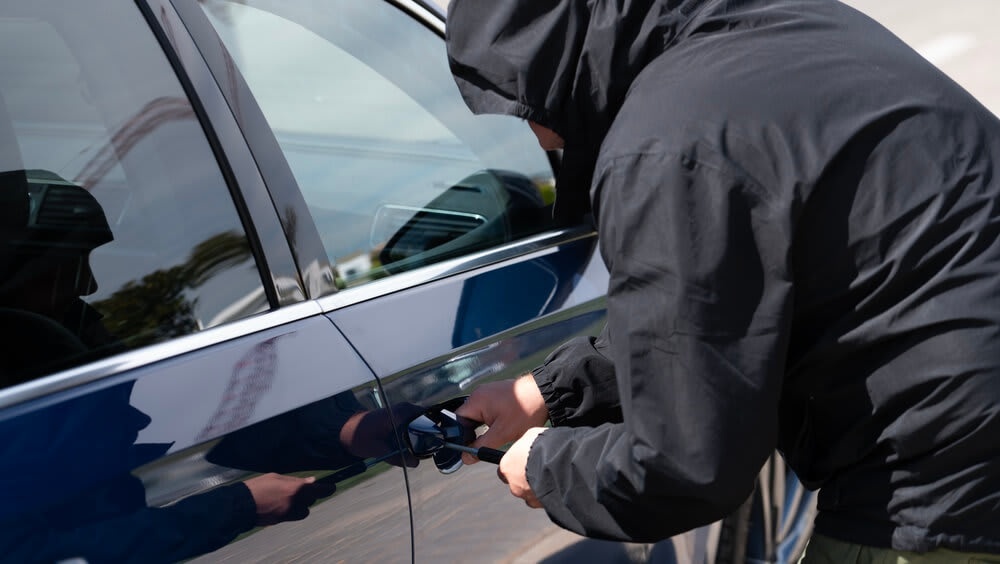
Car Thefts Are Down 21%. Here's Why Dropping Comprehensive Coverage Could Still Cost You
Car Thefts Are Down 21%. Here's Why Dropping Comprehensive Coverage Could Still Cost You
Premiums kept climbing as stolen vehicles fell, so weigh your loan, vehicle value and local weather risk first.
Written by
Anna Baluch
Anna Baluch is an insurance and finance expert at BestMoney.com. With over a decade of writing experience, she specializes in insurance, banking, mortgages, personal loans, and retirement planning. Her work has been featured in publications like Forbes, Newsweek, Fox Business, Credit Karma, Insurify, and Realtor.com. Anna holds a bachelor’s in marketing from Northwood University and an MBA from Roosevelt University. Her goal is to empower consumers to make smart financial decisions.
Car theft is falling fast across the U.S. Reported vehicle thefts dropped 21% in the first half of 2026 compared with the same period in 2025, and the number of thefts fell in all 50 states, according to theNational Insurance Crime Bureau (NICB), a nonprofit organization that tracks vehicle theft and insurance crime.
If you pay for comprehensive car insurance coverage, it's natural to wonder whether you still need it. Theft is one of the risks it covers, but it's far from the only one. What's more, comprehensive premiums have risen even as vehicle thefts have fallen.
Theft Is the Smaller Share of Losses
The disconnect illustrates why we shouldn't equate comprehensive coverage with only theft coverage. Comprehensive insurers are still paying for hail, storms, floods, fires, vandalism, glass, animal strikes and other non-collision losses. Historically, those non-theft losses represent the majority of comprehensive loss dollars.
Katie ScheuerBroker and Division LeaderWorld Insurance Associates
Here's what the data shows and how to decide whether comprehensive coverage still makes sense for your unique situation.
Key Insights
Police recorded 268,415 vehicle thefts in the first half of 2026, a 21% drop from a year earlier, and thefts declined in all 50 states.
The decline extends a three-year trend. Thefts fell 17% in 2024 and another 23% in 2025 to 659,880, the lowest annual total in several decades.
Comprehensive premiums moved the other way. The national average comprehensive premium rose 18.7% in 2024, to $283.15, even as thefts fell, according to state insurance regulators.
Comprehensive car insurance also covers hail, flooding, fire, falling objects, vandalism, animal collisions and broken glass, so lower theft risk doesn’t eliminate the other risks covered by the policy.
Theft risk hasn't disappeared. Thefts rose in the Chicago metro area, and the national theft rate was still about 78 vehicles per 100,000 people.
What the NICB Data Shows
NICB counted 268,415 vehicle thefts reported to law enforcement from January through June 2026, a rate of about 77.81 thefts per 100,000 people. The decline reached every state, extending a trend that began in 2024.
Largest drop: The District of Columbia saw thefts fall 52%, though it still had the highest theft rate of any state or jurisdiction, at 181.94 per 100,000 people.
Highest volume: California recorded the most thefts of any state, with 57,821 in the first half of the year. The Los Angeles-Long Beach-Anaheim metro area is ranked first among metro areas, with 21,540 stolen vehicles.
Highest metro rate: The Bakersfield-Delano, California, metro area had the highest theft rate in the country, at 223.28 per 100,000 people, nearly triple the national rate.
The exception: Among the 10 metro areas with the most thefts, Chicago-Naperville-Elgin was the only one where thefts rose, increasing 2%.
A Three-Year Decline
The 2026 numbers build on two straight years of declining thefts. Vehicle thefts fell 17% in 2024, which NICB called the largest one-year drop in 40 years at the time. They fell another 23% in 2025 to 659,880, according toNICB's 2025 report.
NICB credits coordinated work by law enforcement, insurers and automakers. Thefts of Hyundai and Kia vehicles, which made up a large share of stolen cars during the recent surge, have also fallen: the two brands accounted for 14% of thefts in 2025, down from 21% in 2023.
Thefts Fell, But Comprehensive Premiums Rose
If theft were the main driver of comprehensive pricing, premiums should have dropped along with thefts. But they didn't. According to the National Association of Insurance Commissioners (NAIC), the organization of state insurance regulators, the average comprehensive premium per insured vehicle rose from $238.63 in 2023 to $283.15 in 2024, an 18.7% increase, in a year when thefts fell 17%.
Since 2020, the average comprehensive premium has risen about 62%. The figures come from the NAIC's2024 Auto Insurance Database Average Premium Supplement, published in September 2026, the most recent regulator data available.
Most drivers carry this coverage. Based on the NAIC's exposure data, about four in five insured vehicles had comprehensive coverage in 2024 (BestMoney calculation).
The state-by-state numbers also illustrate how theft trends and comprehensive premiums can diverge. Here are the states with the largest theft declines in the first half of 2026, alongside their average comprehensive premiums:
State
Thefts, first half of 2026
Change vs. first half of 2025
Average comprehensive premium, 2024
District of Columbia
1,262
-52%
$302.75
Tennessee
4,528
-42%
$271.55
Vermont
244
-37%
$220.21
New Hampshire
193
-35%
$181.23
Colorado
5,902
-35%
$521.14
Delaware
581
-32%
$214.34
Florida
10,211
-31%
$277.58
New Mexico
2,516
-31%
$294.21
Nevada
3,897
-30%
$169.86
Kansas
2,155
-30%
$386.26
Iowa
1,182
-30%
$367.02
Missouri
6,386
-30%
$362.22
U.S. total
268,415
-21%
$283.15
Sources: NICB (thefts, January to June 2026); NAIC 2024 Auto Insurance Database Average Premium Supplement (premiums). Premium data covers 2024, the latest year available, so it doesn't reflect 2026 theft trends.
Colorado is the clearest example. Thefts there fell 35%, yet its average comprehensive premium of $521.14 is among the highest in the country. Colorado also sees frequent hailstorms, which can cause costly vehicle damage that comprehensive coverage may pay for. South Dakota, at $533.92, Wyoming, at $476.73, and Texas, at $455.00, also had some of the highest comprehensive premiums in 2024. Hawaii had the lowest, at $127.63.
More recent data suggests overall auto insurance prices are easing. The Bureau of Labor Statistics' price index for motor vehicle insurance was5% lower in September 2026 than a year earlier. However, the NAIC's comprehensive premium data only runs through 2024, so it's too soon to know whether that broader decline has translated into lower comprehensive premiums.
Why Fewer Thefts Don’t Always Mean Lower Premiums
Scheuer explains that the key is claim severity, not just how often claims happen. Car insurance companies look at both the frequency of losses and how much those losses cost when they occur.
“Today's vehicles contain increasingly expensive technology, including cameras, sensors, lighting systems and electronics. Even what appears to be relatively minor theft-related damage can result in a significant repair bill,” says Scheuer.
Lee Perine, co-founder and VP of partnerships at YASSI, a company that offers real-time vehicle data, agrees.
Minor Damage, Major Repair Bills
A bumper isn't just a bumper anymore. Today it can hold radar sensors and cameras, and CCC Intelligent Solutions reports calibrations appeared on 28.3% of repairable claims in 2025, up from 21.8% a year earlier. Damage that once looked minor can mean a costly, specialized repair.
That pushes more cars past the point where repair makes sense. CCC says 23.1% of claims ended as total losses in 2025, up 0.8 points and a new high.
Additionally, insurance pricing is based on much more than one category of claim.
A state can experience fewer vehicle thefts while still having considerable exposure to hail, flooding, wildfires, windstorms, animal collisions, vandalism and glass claims.
“Insurance is ultimately priced around the cost of all insured losses in a market, not whether one particular type of loss is moving up or down,” Scheuer adds.
What Comprehensive Coverage Actually Covers
Comprehensive insurance pays to repair or replace your car after damage that doesn't come from a collision with another vehicle or object. Theft is one part of that. Comprehensive typically also covers:
Hail, windstorms and other severe weather
Flooding
Fire
Falling objects, such as tree limbs
Vandalism
Hitting an animal, such as a deer
Broken windshields and other glass damage
Falling theft rates don't eliminate the other reasons drivers may need comprehensive coverage. In many parts of the country, weather can pose a greater risk to vehicles than theft.
Comprehensive is optional under state law, but whether you should drop it depends on your car, your loan and where you live.
If You Have a Car Loan or Lease, You Likely Can't Drop It
Lenders and leasing companies usually require both comprehensive and collision coverage until the vehicle is paid off or returned, because the car is their collateral. Dropping either type of coverage can violate your loan terms. If you owe more than the car is worth, considergap insurance.
Compare the Premium to What You Could Collect
Comprehensive pays up to your car's actual cash value, minus your deductible. If your car is worth $4,000 and your deductible is $1,000, the most you could collect is $3,000. If you're paying close to the national average of $283 a year for comprehensive insurance, you'd pay more than $1,400 over five years for that protection.
For an older, low-value car, dropping coverage may make financial sense, especially if you could afford to replace the car yourself.
A 10% Rule of Thumb
The rule of thumb is if the car is paid off and the yearly cost of comprehensive (and collision) is more than about 10% of the car's value, or you could replace it from savings without hardship, it may be time to drop it.
Sam AlishahiIndependent Insurance BrokerAlishahi Insurance
Factor in Your Local Weather Risk
In hail-prone states or flood-prone areas, comprehensive claims are more common, and a single storm can total a car. Drivers in those areas should be more cautious about dropping comprehensive coverage, even on an older vehicle. Our guide tohow your ZIP code affects car insurance rates explains how location shapes pricing.
Check Your Local Theft Picture, Too
National averages can hide local risk. The Bakersfield metro area and Washington, D.C., both have theft rates well above the national average, and thefts in the Chicago area are rising. Some models are also stolen far more often than others. See our list ofcars with the highest theft rates.
Many Drivers Are Already Cutting Coverage
Rising premiums have pushed many drivers to trim their policies. In BestMoney'ssurvey of drivers, 15.1% of respondents who made changes in the past year to lower their premium said they dropped comprehensive and/or collision coverage.
That may be a reasonable choice on a low-value car. On a newer or financed car, or in an area with frequent severe weather, dropping coverage could leave you responsible for the cost of repairing or replacing your vehicle after a covered loss.
Ways to Lower Your Comprehensive Cost Without Dropping It
Raise your comprehensive deductible. A higher deductible lowers your premium, but only choose an amount you could pay tomorrow. Moving from a $250 or $500 deductible to $1,000, for example, may reduce the premium while retaining protection against a catastrophic loss. Our guide onwhen to adjust your deductible can help.
Ask about anti-theft and parking discounts. Some insurers offer lower rates for anti-theft devices or for cars kept in a garage. Ask your insurer which discounts are available.
Shop around at renewal. Comprehensive pricing varies by insurer, so comparing quotes for the same coverage can reveal savings.
Review your coverage each year. As your car ages and its value falls, the math on comprehensive changes. Our guide toliability vs. full coverage explains how to weigh the trade-off.
Your Questions, Answered (FAQs)
Will falling car theft rates lower my insurance premium?
Not on their own. Theft is only one factor in comprehensive pricing, alongside weather damage, repair costs and the value of your car. The NAIC's data shows comprehensive premiums rose in 2024 even as thefts fell 17%.
Does comprehensive insurance cover a stolen car?
Yes. If your car is stolen and not recovered, comprehensive typically pays its actual cash value, minus your deductible. Liability-only policies don't cover theft.
Is comprehensive coverage required by law?
No state requires it, but lenders and leasing companies usually do. See our guide totypes of car insurance for how each coverage works.
When does it make sense to drop comprehensive?
It can make sense when your car is paid off, its value is relatively low compared with the premiums and deductible, and you could afford to replace it. It makes less sense if you live in an area with frequent hail, flooding or high theft rates.
Which states saw the biggest drop in car thefts in 2026?
In the first half of 2026, the District of Columbia saw the largest decline (52%), followed by Tennessee (42%), Vermont (37%), and New Hampshire and Colorado (35% each), according to NICB.
Why Trust BestMoney?
This article was written by Anna Baluch, a finance writer with more than a decade of experience covering insurance, banking and retirement planning. Theft data comes directly from the National Insurance Crime Bureau, a nonprofit; premium data comes from the National Association of Insurance Commissioners; and price index data comes from the Bureau of Labor Statistics. We don't use statistics from individual insurers, and our editorial team reviews each article for accuracy before publication.
The Bottom Line
Fewer cars are being stolen than at any point in decades, which is good news for drivers. But the takeaway for your coverage is simple.
“Comprehensive insurance isn't really ‘theft insurance.’ It's protection against an entire category of losses that can damage or eliminate the value of your vehicle,” explains Scheuer.
Fewer thefts don’t make hail, floods, fires, vandalism, or animal strikes magically disappear. Before you drop a comprehensive policy, check whether your lender requires it, compare your car's value with what you'd pay in premiums, and weigh the weather and theft risks where you live.
Written byAnna Baluch
Anna Baluch is an insurance and finance expert at BestMoney.com. With over a decade of writing experience, she specializes in insurance, banking, mortgages, personal loans, and retirement planning. Her work has been featured in publications like Forbes, Newsweek, Fox Business, Credit Karma, Insurify, and Realtor.com. Anna holds a bachelor’s in marketing from Northwood University and an MBA from Roosevelt University. Her goal is to empower consumers to make smart financial decisions.