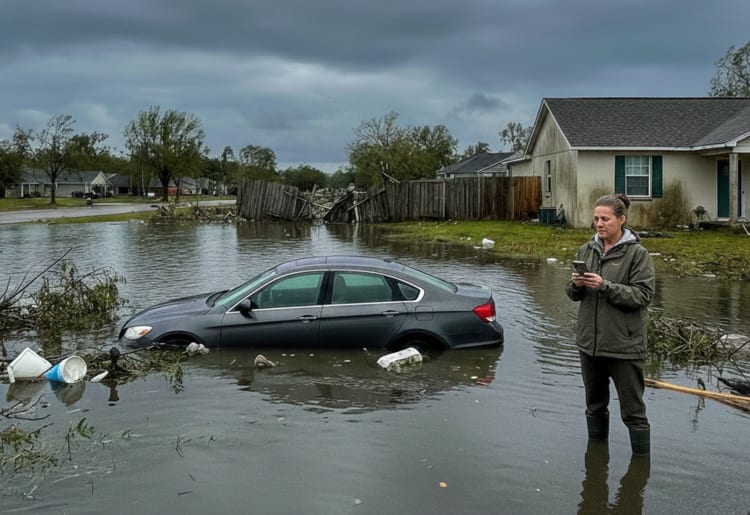
Climate patterns are shifting, and severe weather events are becoming more frequent. Most drivers in disaster-prone areas focus on protecting their homes but overlook their vehicles until it's too late. A flooded engine can total your car even if water only reaches the dashboard.
In my experience handling catastrophe claims after hurricanes, floods, and wildfires, most drivers assume their car is "safe enough" because it's parked at home or they don't drive during storms. Liability-only policies offer zero protection, and comprehensive coverage is optional. The biggest gap I see after major disasters is the total loss of coverage.
Learn which coverage protects your vehicle during natural disasters, how to compare car insurance companies for catastrophe response, and critical timing rules to avoid being left uninsured.
Key Insights
- Comprehensive coverage is the only auto insurance protection for natural disasters. Liability-only policies provide no protection.
- Disaster claims settle at actual cash value (ACV), not replacement cost, meaning depreciation significantly affects payouts.
- Deductibles apply per event, so multiple disasters in one year result in multiple out-of-pocket payments.
- Coverage timing matters. Once storms are named or emergencies declared, insurers freeze coverage changes.
What Car Insurance Covers During Natural Disasters
How Comprehensive Coverage Protects Against Disasters
Comprehensive coverage protects against:
- Flood damage (hurricanes, flash floods, storm surge)
- Fire and wildfire damage (direct fire, smoke, ash)
- Hail damage (dents, cracked windshields, body damage)
- Wind and storm damage (fallen trees, flying debris, structure collapse)
- Other covered perils (lightning strikes, volcanic eruptions, falling objects)
According to the Insurance Information Institute, approximately 78-80% of U.S. drivers carry comprehensive coverage, with an average annual cost of around $160-$200 nationwide. Your comprehensive deductible applies to each incident.
Most auto policies settle disaster claims based on actual cash value, which accounts for depreciation, not what it would cost to replace the vehicle today. During mass catastrophes, vehicle shortages and repair inflation drive prices up, while payouts remain tied to pre-loss market value.
What Car Insurance Doesn't Cover After Natural Disasters
Standard auto policies have important gaps: liability-only policies provide zero disaster protection, earthquake damage is generally excluded, intentional risk like driving into clearly flooded roads isn't covered, aftermarket modifications need documentation, and pre-existing maintenance failures aren't covered.
"We're seeing more intense weather events across the United States. Even regions that historically experienced moderate storm activity now face higher-risk scenarios, meaning vehicles are increasingly exposed to flood, hail, and wind damage that many drivers never planned for," says Dr. Phil Klotzbach, PhD, Senior Research Scientist at Colorado State University specializing in meteorology and hurricane forecasting.
Pro tip: Photograph aftermarket parts (wheels, lift kits, audio systems) and save receipts before disaster season. Without proof, adjusters can't include them in valuation.
10 Car Insurance Tips for Disaster-Prone Areas
Strategic preparation and the right coverage can save you thousands when natural disasters strike.
1. Verify You Have Comprehensive Coverage with Adequate Limits
Liability coverage alone won't help if a wildfire burns your car or flooding destroys the engine. Comprehensive coverage is optional, and many drivers skip it to save money.
Check your policy:
- Declarations page: Confirm comprehensive coverage is active.
- Coverage limit: Verify it matches your vehicle's current value.
- Deductible amount: Confirm your out-of-pocket cost per claim.
- Lender requirements: Financed or leased vehicles require comprehensive coverage.
Average comprehensive coverage costs in disaster-prone states:
- Florida: $230/year
- California: $210/year
- Texas: $190/year
- Louisiana: $240/year
- Oklahoma: $180/year
I usually tell clients to compare the vehicle's market value to their deductible and premium. If the car is worth less than $3,000 with a $1,000 deductible, comprehensive may not make financial sense. But in disaster-prone areas, even older vehicles can justify coverage if replacement would cause hardship.
2. Choose Disaster Deductibles You Can Realistically Afford
Comprehensive deductibles typically range from $100 to $2,000. Lower deductibles mean higher premiums but lower out-of-pocket costs. Higher deductibles mean lower premiums but more out-of-pocket expenses.
If your area experiences multiple disasters in one year, you'll pay your deductible each time you file. According to NOAA's National Centers for Environmental Information, the U.S. now averages 18-20 billion-dollar weather disasters per year, up from 3-4 annually in the 1980s.
Pro tip: Keep your comprehensive deductible amount set aside in an emergency fund.
3. Understand Flood Damage Coverage and Saltwater Risks
Comprehensive coverage handles water damage from flooding, storm surges, flash floods, and heavy rain, but saltwater corrosion ravages electrical systems, wiring, sensors, and modules. This often emerges months later. Adjusters frequently declare saltwater-flooded vehicles total losses due to this hidden, ongoing damage.
The National Highway Traffic Safety Administration advises that totaled flood vehicles receive salvage or flood titles before resale, urging buyers to check for musty odors, waterlines, rust, and title histories post-disaster.
4. Report Your Accurate Garaging Address to Your Insurer
Your vehicle's overnight parking location determines natural disaster risk ratings and premiums. Misrepresenting your location can void coverage.
Pro tip: Update your garaging address anytime your parking location changes for more than 30 days, including seasonal homes or long-term work assignments.
5. Prepare Documentation and Photos Before Disaster Season
One of the biggest gaps in disaster preparedness is underestimating how quickly infrastructure and personal assets, including vehicles, can be lost during extreme weather. Insurance coverage and documentation are often overlooked until after the event, but preparation before a disaster is what determines whether recovery is manageable or financially devastating.
Capture exterior/interior photos from all angles (VIN, odometer, license plate), receipts for aftermarket parts/repairs, and existing damage images. Store securely in cloud/email, or waterproof containers to prioritize your claim during high-volume adjuster periods, speeding settlements by weeks.
6. Know How and Where to Park During Storms or Evacuations
Park on the highest ground for floods and hurricanes, avoid underground garages, trees, and power lines. For wildfires, park in cleared areas away from vegetation. Use covered garages or blankets for hail. Never shelter in vehicles during tornadoes.
7. Know What to Do Immediately After Disaster Damage
- Safety first: Don't enter vehicles with downed power lines nearby or in floodwater.
- Document everything: Take extensive photos and videos before moving the vehicle.
- Prevent further damage: Cover broken windows if the vehicle is still drivable.
- Report promptly: Contact your insurer within 24-48 hours.
- Don't start flooded engines: This can cause additional damage; wait for adjuster inspection.
The average disaster auto claim settlement takes 14-30 days. Mobile catastrophe claim units are typically deployed within 48-72 hours of major events.
The biggest mistake I see is starting flooded vehicles or moving them before documentation. The second mistake is waiting too long to report the claim. Early reporting is critical during mass catastrophes.
8. Understand When Your Car Will Be Totaled vs Repairable
Most states require insurers to total vehicles when repair costs exceed 70-80% of the actual cash value. Disasters cause total losses because flood damage to engines and electrical systems is expensive, smoke and ash require extensive interior replacement, body-wide hail damage may exceed repair value, and simultaneous repair demand inflates costs.
After total loss, your insurer pays the actual cash value minus the deductible. Gap insurance covers the difference if you owe more than the payout.
Pro tip: Gap insurance is especially important in disaster zones where ACV payouts may fall short due to sudden market volatility and vehicle shortages.
9. Consider Rental Coverage for Disaster Situations
Rental cars become scarce and expensive after disasters. Rental coverage ($20-60 annually) provides daily reimbursement ($30-100/day) for up to 30 days during repairs. One week of rental ($350-500) far exceeds the annual premium.
Rental car insurance is one of the most undervalued protections in disaster areas. After hurricanes and wildfires, rentals become scarce, expensive, and long-term.
10. Choose Insurers with Strong Catastrophe Response
Prioritize carriers with mobile claim centers in disaster zones, expedited processing post-event, 24/7 reporting plus advance payments, top J.D. Power claims ratings, and proven catastrophe handling.
The 2025 J.D. Power U.S. Auto Claims Satisfaction Study finds top performers like Erie (743/1000) lead in settlement speed and communication. These factors speed resolutions when catastrophe claims surge. Others struggle with delays.
How to Compare Car Insurance for Disaster Coverage
When shopping for coverage in high-risk areas, compare:
- Comprehensive deductible options ($250-$2,000)
- Rental coverage details (typically $30-100/day for 15-30 days)
- Catastrophe claims reputation (J.D. Power ratings, BBB complaints)
- Disaster response (mobile claims centers, 24/7 reporting, photo claim options)
- Additional protection (gap insurance, new car replacement)
Pro tip: Get quotes from insurers experienced with your region's specific risks.
The Final Word: Protection First
Comprehensive coverage is non-negotiable in disaster-prone areas. Drivers should carry comprehensive coverage with a deductible they can comfortably afford, rental reimbursement, and gap insurance if financing. Preparation (documentation, correct garaging address, and early coverage review) separates a smooth claim from a financial disaster when nature strikes.
Before the next storm, wildfire, or severe weather alert, verify your comprehensive coverage is active, confirm your deductible fits your budget, and document your vehicle's condition. Compare car insurance options that prioritize comprehensive coverage and strong catastrophe response in your region.
Methodology
- Expert verification: All insurance information was reviewed and verified by Joey Haddad, Licensed Insurance Adjuster (FL, TX, GA, LA, SC, NC, MI, AL, NM, WV) with 15+ years of experience handling catastrophe and disaster-related auto claims.
- Sources: National Oceanic and Atmospheric Administration (NOAA), Insurance Information Institute (III), Federal Emergency Management Agency (FEMA), National Highway Traffic Safety Administration (NHTSA), and State Insurance Departments.
- External expert perspectives: Dr. Phil Klotzbach, PhD, Senior Research Scientist at Colorado State University and Craig Fugate, former Administrator of FEMA.
- Transparency note: This information is provided for educational purposes. This article does not constitute insurance or legal advice. Always review your specific policy details and consult with licensed insurance professionals before making coverage decisions.
Frequently Asked Questions
1. Does car insurance cover flood damage?
Yes, but only with comprehensive coverage. Liability coverage doesn't protect against flood damage. Comprehensive covers water damage from natural floods, hurricanes, heavy rain, and storm surge, minus your deductible.
2. Will my insurance cover wildfire damage to my car?
Comprehensive coverage protects against wildfire damage, including direct fire, smoke damage to interior and mechanical systems, and ash damage to paint. Coverage applies whether fire reaches your vehicle or damage occurs from nearby fires.
3. Can I add comprehensive coverage after a storm is named?
No. Most insurers won't allow policy changes, including adding comprehensive coverage, once a storm is named or a disaster is imminent. You must purchase comprehensive coverage before the threat is active.